
Last updated March 23, 2026 — Revised for clarity.

When we are young, each day can feel like an eternity. As we grow older, our perception of time changes because we have less time ahead of us. However, here are eight individual explanations for this phenomenon.
As we grow older, periods of our lives diminish into smaller and smaller segments of our entire life span.
Here is a simple example that should make this clear:
That's a small fraction, and the same period will become a smaller and smaller segment of your life as you age.
Here's another way to explain how ratios affect our judgment of time:
When we grow from five to ten years old, we double our age. We feel that a lot of time has gone by. After all, we just doubled our age!
Then, when we continue through life from ten to twenty, we double our age. But wait! What's different now? That prior period was just five years. Now, all of a sudden, it was ten years!
Now consider aging from twenty to forty. We doubled our age again, but this time, twenty years have passed!
Every time we double our age, twice as many years go by. That is the ratio effect.
The ratio keeps shrinking, which causes the illusion that time is speeding up.
When we were very young, every day was filled with discoveries and learning experiences. We look back on that and visualize time filled with memories.
As we get older, we lack the constant discovery of new experiences we had every day in our childhood.1
Our days become monotonous with repetitive tasks, and we spend much less time on new experiences. That doesn’t leave a fulfilling memory of any sort to look back on. It almost becomes an empty feeling of the recent past days.
When we allow this kind of void in our lives, we have nothing much to look back on. That void causes us to feel that time has passed more quickly.
Claudia Hammond, the author of “Time Warped: Unlocking the Mysteries of Time Perception,” explains that as we get older, we have fewer new experiences.2
When we look back on the prior week or the previous year, we see fewer memorable events to fill that period than we had decades earlier.
A newborn continually fills each moment with learning something new. In our formative years, we are cramming each day with learning and experiencing something new. Therefore, when we look back on the prior week or month, we have lots of memories. The effect is that time had moved on very slowly.
As we get older, we fill our time with fewer new experiences, so we can’t recall anything of value from what we did in the previous year. Therefore, our impression is that time is whizzing by since our years seem more void of refreshing experiences. That void causes the illusion that time is shrinking.

In a Scientific American article, the author refers to a study published by Steve Janssen, William Friedman, and Makiko Naka (Hokkaido University in Japan).3
They questioned 868 participants, comparing “time pressure” in their lives ten years ago to their current lives.
They discovered that the notion of “time pressure” contributed to their perception of time. The results also showed that age made no difference. Those who felt time pressure ten years ago had as much a sense that time was flying by as they had later in life.
The conclusion is that feeling pressure due to a lack of time to perform tasks has a greater impact on the sense of time going faster. Merely being older has little to do with it.
However, with less time remaining in our future as we age, each passing moment seems more precious. That thought puts tremendous pressure on our feelings.
Children have fewer responsibilities to fill their days, and time feels like it drags on for that reason.
As we get older, we certainly never have the time to complete our chores and other tasks we want to do. Therefore, we always feel like we're running out of time.
That lack of time creates the illusion that time must be going faster.
When we’re younger, we look forward to the next significant accomplishment in our lives, such as getting a driver’s license, graduating from college, getting married, advancing in a career, and so on. That anticipation of one event after another causes time to appear slow.
But when we are older and have fewer years ahead of us, that anticipation of a future declines. The lack of anticipation makes time seem to fly by because we are not spending every minute of every day thinking about what our life will be like in ten or twenty years.
We live in a world where we have devices that cause a warped sense of time. That device is a television. As we grow up, we watch series that last anywhere from a year to many years, even decades.
As the years go by, the shows are repeated, and while we watch the repeats, we are oblivious to the passage of time because the actors in the shows don't age.
Without thinking much about it, our beloved stars remain fixed at a young age. They don’t grow old with the rest of us. So we overlook that they have aged the same as we have. Some have even passed away.
We continue to put ourselves into a trance as we watch old television shows from the early days.
So, where are we? We’re getting older and suddenly notice a lot of years have passed. That’s warping our sense of time.
Albert Einstein mathematically showed that time slows down the faster one moves. In October 1971, scientists proved his theory by carrying an atomic clock on an airplane going eastward and another westward.
These clocks were compared to a reference atomic clock on Earth at the U.S. Naval Observatory. The eastward flying clock lost approximately 59 nanoseconds, and the westward clock gained about 273 nanoseconds.4
Within our frame of reference, any changes to the speed of time would be completely unnoticed due to the theory of relativity.
Okay, I admit, I threw that one at you. But I was leading up to a little levity while on the subject:
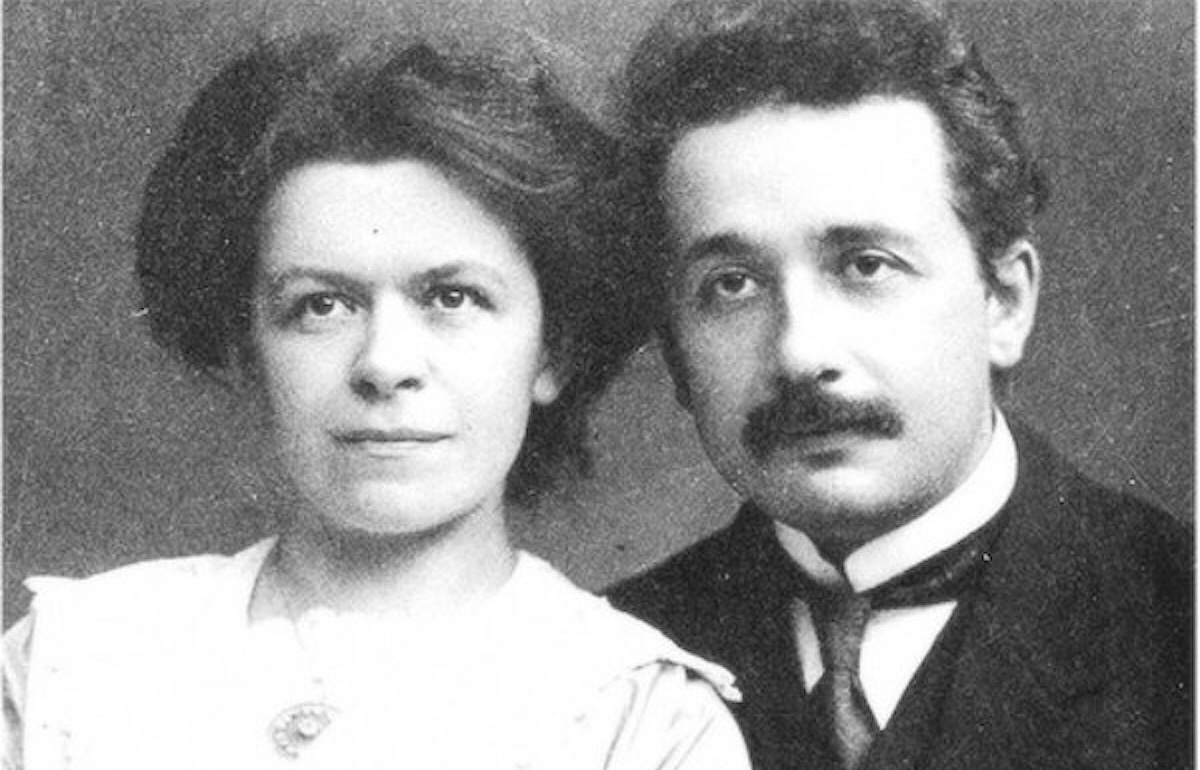
When Einstein was young, his wife had complained that it was over so fast when they were having sex. Einstein said to her, "It's all relative."
As adults, we fill our days with responsibilities, and we often tend to lose track of time. If we don’t pay attention, we might be late for an important meeting, and we wonder where the time went.
There are many explanations for the phenomenon we all experience with time seeming to speed up as we age. In my opinion, the most critical is the lack of new experiences that fill our time. It’s a good reason to make an effort to seek new activities to occupy our time in our old age.
Was this article helpful?