
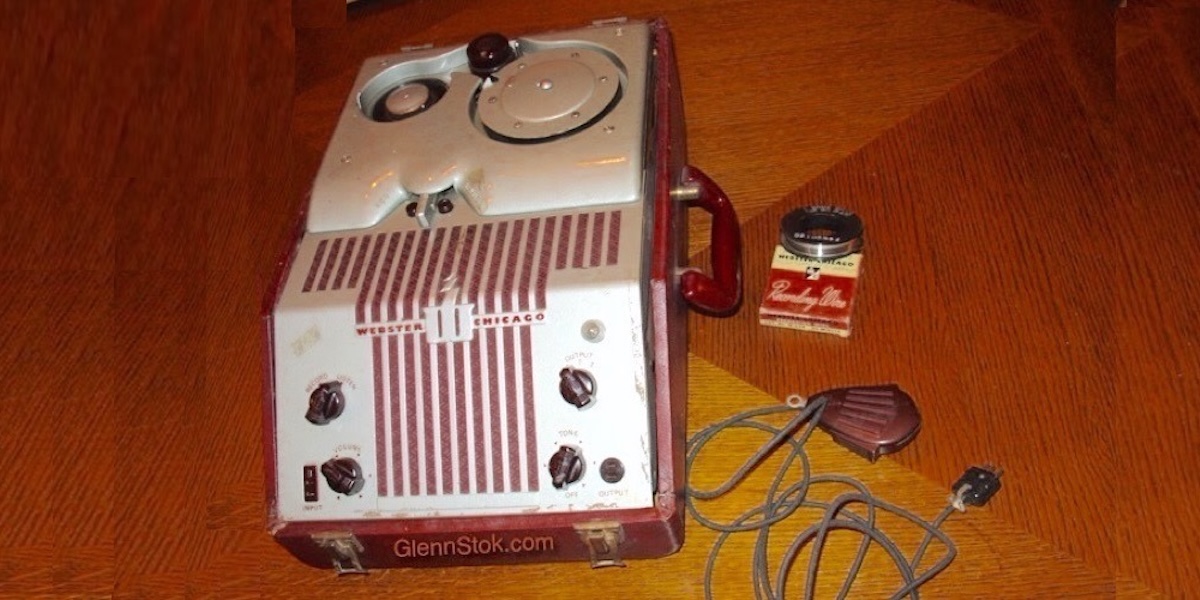
I still have my father's Vintage Webster-Chicago audio recorder from the 1950s. It uses magnetic steel wire spools (or reels) instead of tape.
Wire spools were used before magnetic tape was used for sound recording. Unfortunately, using wire for recording was troublesome since it tended to break, and we couldn't splice it back together.
The method of recording with wire spools is similar to how tape recorders work. While recording, the wire passes through a recording head that magnetizes the wire, creating an analog audio representation of the original sound with magnetically induced polarity along the wire.
When playing back recordings, the magnetic field on the wire induces an electric current as it passes through the head. That small current is amplified for playback. The same method is used for tape recorders.
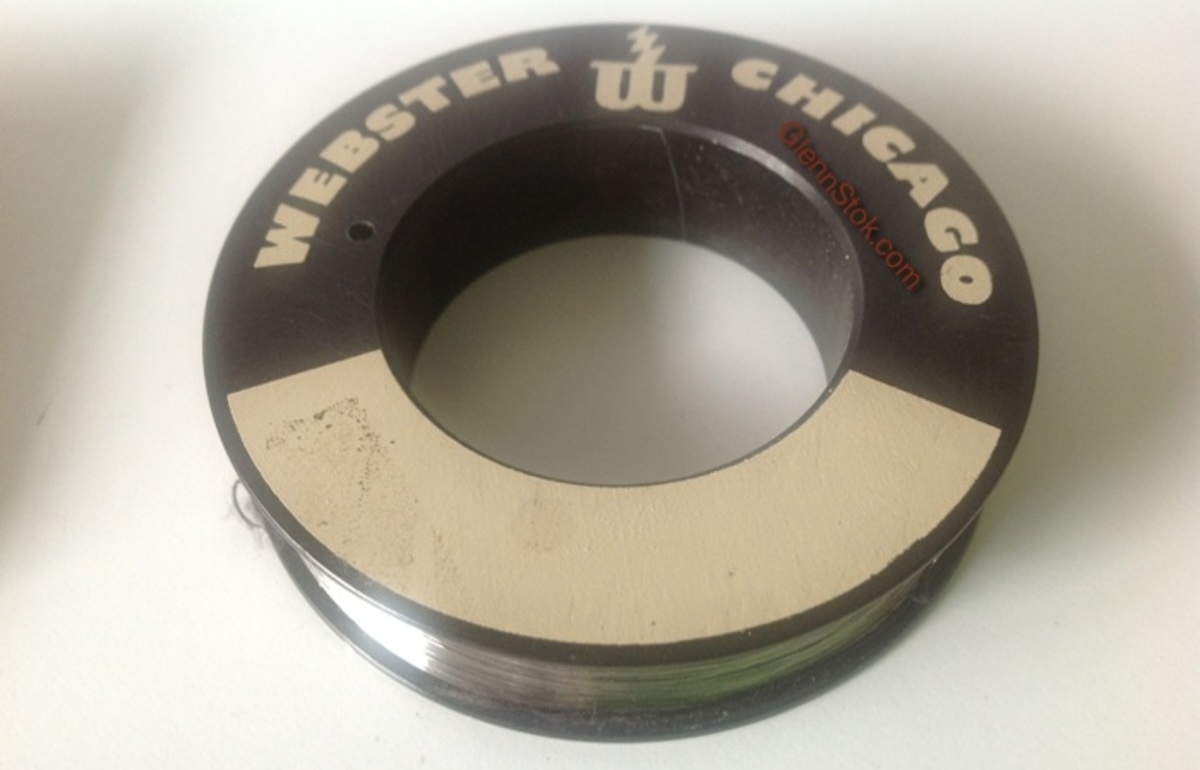
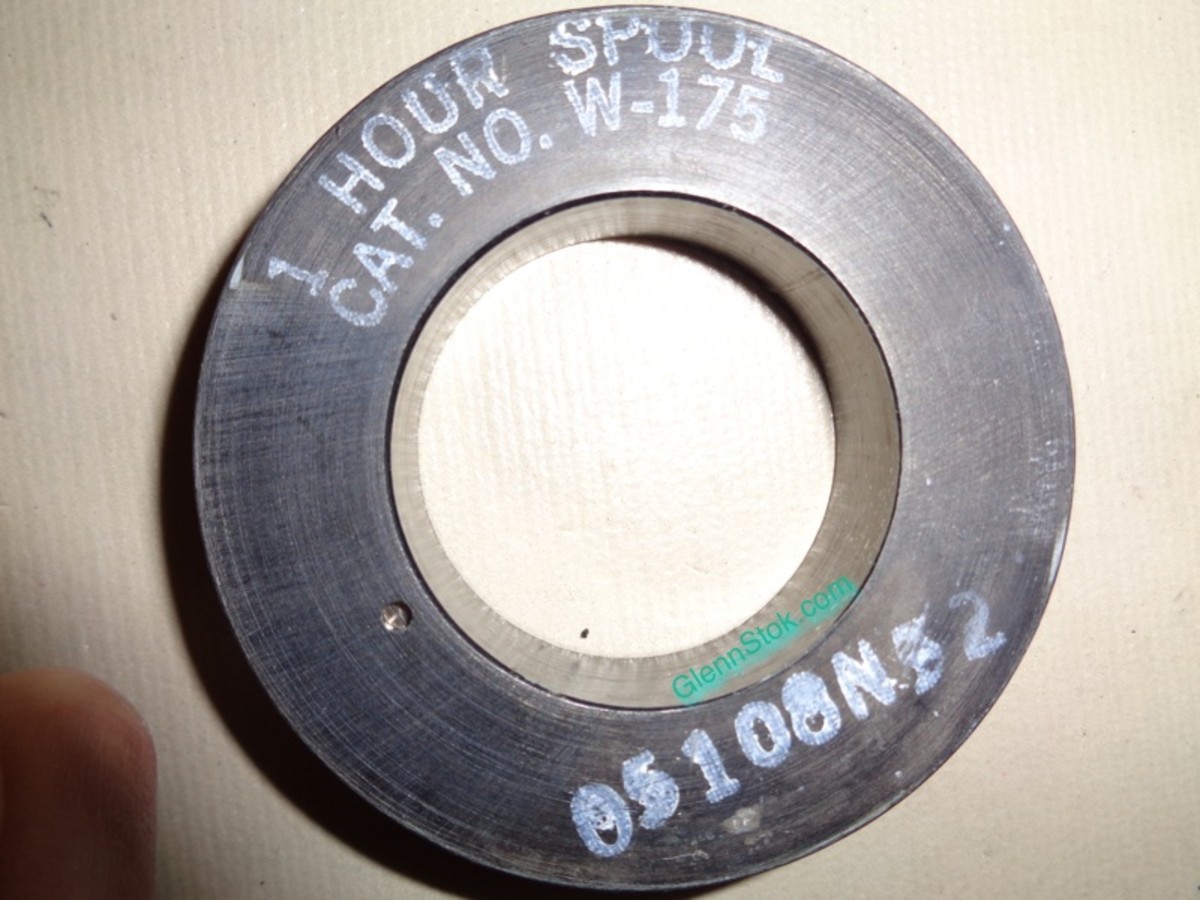
The spools, using stainless steel recording wire, provided up to one hour of audio recording.
In 1899, Valdemar Poulsen, a Danish inventor, developed a device to record sound on steel wire. He patented it and named it the Telegraphone.
Later, Poulsen’s company made a version of a dictating machine that used reel-to-reel wire. By 1947, wire recorders were used for all audio recording.
One well-known manufacturer of wire audio recorders was Webster-Chicago. My father gave me his old Webster Wire Recorder. It was the Model 80, which was built around 1947.
I didn't want to lose the ability to use it whenever the feeling struck me to hear old family recordings, so I took care of it. I kept it in a dry closet rather than storing it in a damp basement.
Once in a while, I'd take it out, plug it in, and check to be sure it still worked. It gave me many years of enjoyment, playing old recordings that my father had made.
These units are obsolete now. However, sometimes I see people selling them on eBay. But most are non-functional. I'm lucky mine still works, although it recently developed an AC hum, probably due to a dried-out capacitor.
Magnetic tape was changed several times since the days of wire reels for recording, from Reel-to-reel tape to 8-track tape, and finally cassettes.
During my childhood, we already had reel-to-reel tape recorders. Technology has progressed since then. Imagine that my father recorded on a wire. Here's a close-up photo of one of the wire spools.
Things sure have come a long way. Even magnetic tape became obsolete when digital recording became the standard. Since then, young kids have only known iPods or MP3 players.
Even CDs are considered obsolete now. Today, flash memory is the storage medium of choice.
Imagine how far we've come. I still remember 45 rpm records and LP vinyl records.
Before we know it, we'll have a multicellular neural recorder. Or maybe a microfluidic recording device. To make chips even smaller, we'll find ourselves using a bioelectrochemical recording device. Oh! But I think I'm getting ahead of myself.
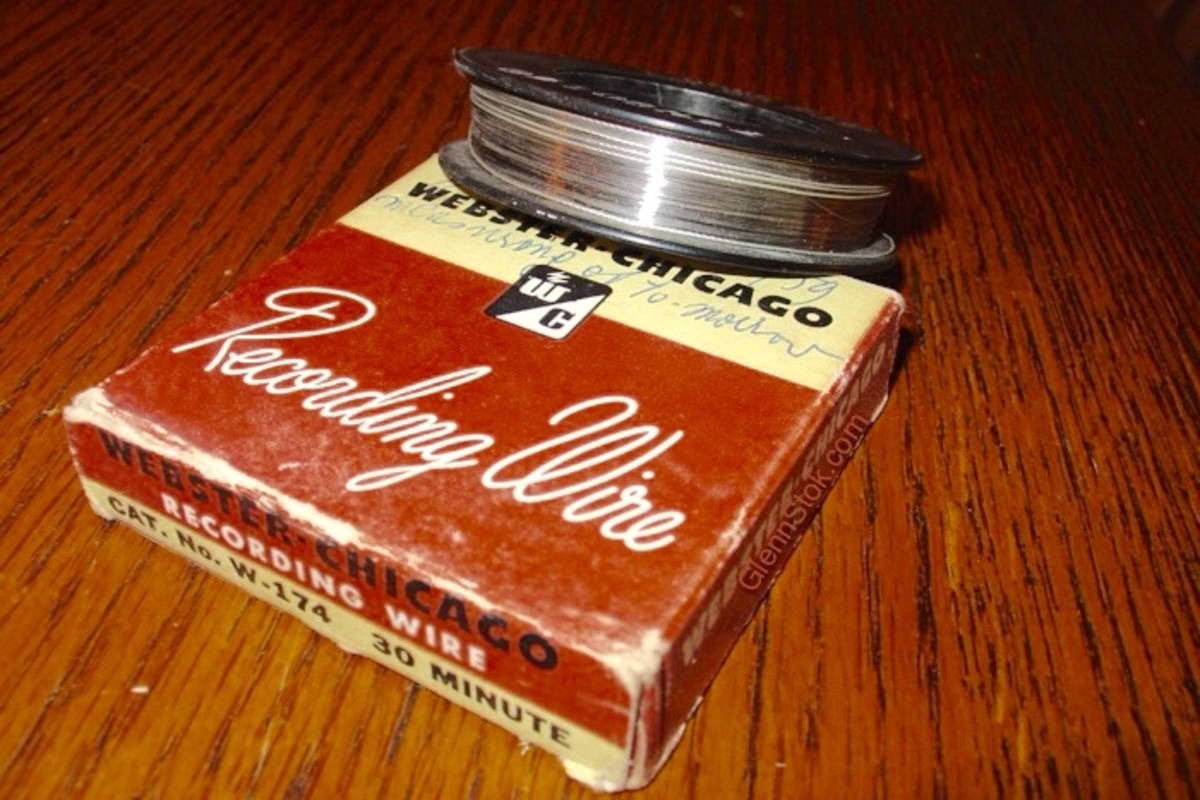
My father loved to record classical music from the radio. So, I have dozens of wire spools with interesting and nostalgic broadcasts from the mid-1900s.
A few of the wire spools also contained private family recordings of my parents playing with my sister and me when I was only a few months old. I could hear myself as an infant, making baby sounds. Those recordings are precious!
It’s interesting to hear my father’s voice and my mother’s foreign accent that she had when I was only four years old. However, it felt a little strange listening to their voices recorded from that time.
The wire in the old spools broke easily. They can't be spliced back together as we can do with recording tape.
So to have a permanently preserved copy of all those recordings, I converted them to digital files. I saved them on my computer with a backup copy on a USB memory stick.
There was no perfect way to connect the Webster Wire Recorder to a USB port, so I used a Zoom H2n Mic/Recorder (available on Amazon) to create MP3 files.
The Zoom H2n is a microphone that records WAV or MP3 formats onto a flash memory chip.
I avoided any problems matching vintage electronics with an audio connection by using the Zoom Mic. It's excellent for digitizing audio. I just needed to eliminate any background noise in the room.
I made the following video to preserve this vintage relic. The wire recording you'll hear me play in this video is one my father made from a radio broadcast in 1956.
A note about old-time radio recordings:
According to the Library of Congress, radio recordings made before 1978 are generally in the public domain.
Old electronic circuits tend to die after so many decades. The old capacitors dry out. The coating on wires becomes brittle and falls off, exposing the wires.
I'm glad I digitized all the wire recordings my father made to preserve them. Since I made that video, my Webster developed an AC hum due to old age.
Amazingly, it lasted this long, probably due to the way I stored it. I made sure not to leave it in a damp basement or a cold attic. Instead, I always kept it in a controlled temperature and humidity environment.
Another thing that I'm sure helped preserve it was that I plugged it in and played recordings once in a while. That helped keep the electronic components from drying out.
When you plug in an old electronic device after decades, it is possible that a capacitor can explode.
I guess I had powered it up often enough to avoid this. Today, all our electronic gadgets are solid-state. It’s all IC's now—Integrated Circuits.
It's enjoyable to preserve these technological treasures so we can continue to experience the nostalgia and enjoy the memories of family recordings.
It's even more significant because these treasures are kept from the days before our present recording technology.
Was this meaningful to you? Tap