
Last updated April 2026 — revised for clarity.

Your emotional state of mind can interfere with your stock trading success. The method described here will improve results without the harmful effects of emotions.
You buy stock in the hope that it will increase in value. Then it goes down, and you hold on because it would hurt your ego to admit you were wrong.
You tend to buy too high because you see a stock going up and want to get in on the action, but you end up buying at the highest price out of greed, and then the stock tumbles.
You don't want to admit you were wrong, so you ride a bad trade down until it gets even worse.
You enter a bad trade to try to overcome a previous loss.
You get out of a bad trade too late when you reach your pain threshold, but that’s when everyone else begins to buy.
Do you recognize any of these scenarios? When your emotions get involved, you hold on to losing trades until you feel the pain, then buy when you see stocks rising because you feel the need to ride the trend.
Both of these cases can cause you to lose money because you might buy high and sell low—the reverse of what you want to accomplish.
Once you master your emotions, you'll avoid doing the wrong thing for the wrong reason. The best way to avoid emotional trading is to enter and exit every trade with a specific, pre-defined plan.
A particular stock may be so far down that you want to double your next trade. However, don't do it, as it could drop even lower.
You already would be getting more shares anyway because you're buying a fixed amount each time. Be happy with that. It's known as dollar-cost averaging.1
What if the stock goes higher?
That is not a good decision at all because you would be buying high and possibly selling low later when you realize you made a bad trade.
That's greed! I use a trick to catch myself by asking, "Am I doing this out of greed?" We may only realize we are being greedy when confronted with that question.
When you find yourself overthinking a trade position, it often involves a greedy emotion. Otherwise, you'd be fine merely going with the planned strategy.
What if you lose money?
In that case, you might feel you want to get back to break even. Therefore, you impulsively buy another stock, hoping to recoup your losses. But you end up entering a bad trade in an attempt to regain the previous loss.
That entire process is based on emotion. So, it's crucial to recognize when you're doing that and avoid the temptation.2

It helps to keep things simple. For starters, trade the same amount with each trade. Don't increase it because you're becoming greedy. And don't sell it out of fear if the stock drops.
Fear of loss and greed for more are two emotions that cause trouble with trading decisions. The best way to avoid that is by using a mechanical trading method.
It automates the process, so you don't need to think much about it. Thinking is where emotions thrive. When you automate every action, you won't be subject to emotional feelings that cause you to change your plan.3
So, how do you do that?
Never buy a stock at the market price just because you think it will go up. When you have specific rules for placing orders to buy, as I discussed above, you're following a mechanical process rather than an emotional response.
So, always use limit orders. That also applies to your exit strategy. Plan an exit strategy before you enter a trade.
Decide what conditions you will accept. Do you want to make a hundred bucks—or a thousand? What about a loss? Are you willing to lose only $100?
If one of those conditions occurs, you will most likely change your mind due to fear or greed. So, once again, you need to handle all those conditions mechanically so you don't need to rethink things later.
With that in mind, let's review all the steps to trade mechanically.
Step 1: Plan Your Entry Point
It would help to have a rule for when to buy and when to sell. Don't buy a stock when you discover it and think it might be an excellent addition to your portfolio. It's best to research a stock to decide what price is right for getting into it.
Another point to understand is that stock prices fluctuate throughout the day. So, if you want to buy it, first examine the daily chart to see how much it has fluctuated in the past few hours. That will help you judge where to place your bid for the limit order.
Sometime later in the day, your order might be filled, and you'll be happy you got a better deal than if you had gone in on the trade right away at the market price.
Be Patient With Price Fluctuations. When you use a limit order, it may never be filled. But don't be afraid of missing out. If you miss one, there will always be other opportunities.
Step 2: Plan Your Exit Strategy
It’s crucial to place sell orders as soon as you buy a stock. You’re not emotionally involved yet, and that’s why it’s the best time to plan your exit rules.
You need to handle both extremes. Sell at a loss before it gets worse, and sell at a gain when it reaches your desired profit.
I'll explain how to do that by placing a Good Till Canceled (GTC) sell order at your desired gain and another at the low point to lock in the worst loss you're willing to have.
You can set both orders simultaneously by making them "One-Cancels-Other (OCO)."
You might think it will be different from how you felt when you entered the trade. Then you'll want to change the order to sell at another price.
It's vital that you leave these orders alone and not change them later. Don't let your emotions cause you to change your mind.
If you keep changing your strategy, you’ll defeat your initial plan. I learned that whenever I modified a strategy midstream, I usually screwed up the process.
Interestingly, we tend to be accurate with our judgment at the beginning when we're clear-headed. That's because we're not yet entangled in the trade, and our emotions are not involved.
When you make changes later out of greed or fear of loss, you're doing it for the wrong reason. So leave it alone and let the trade work as initially planned.
How to Use One-Cancels-Other (OCO) Orders
With One-Cancels-Other, you can set a closing trade with a specific gain and with a stop-loss at the same time. Whichever condition occurs first is executed, and the other is canceled. Make sure your broker allows OCO orders.
Stock prices don't go up and down at the same time. Therefore, you either take your profit when you have it or limit your loss if the position goes against you.
Plan how much you are willing to risk, and set the stop-loss accordingly. Take advantage of the OCO order entry by including a limit order at the price with the gain you'd be happy with.
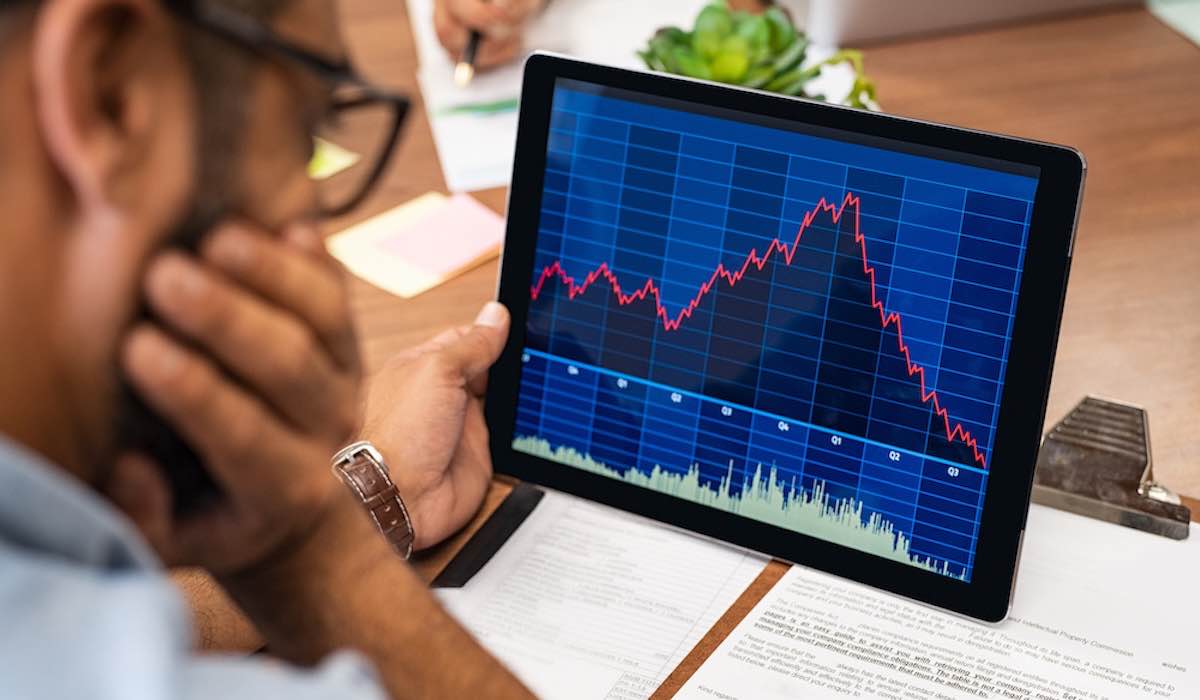
I'll give you an example of what can happen when you don't apply mechanical trading. Emotions begin to enter the picture and can badly affect your exit strategy.
Are you willing to ride a stock all the way down? Of course not!
People get emotional when they see their trades go the wrong way. And instead of closing the trade to limit losses, they hope for a recovery and let it ride.
The problem is that stocks don't always bounce back. If they begin to slide down for any reason, that trend may continue for a long time. Therefore, it's crucial to take losses early before they grow bigger. You can always repurchase a stock if it looks promising later.
I once held a stock until the company went bankrupt, and its shares went to zero. I kept telling myself I'd wait for it to rebound until I got my money back. But I just kept losing more.
The trick is to have the courage to admit you're wrong and close the trade! Fear of losing more will keep you in the trade, hoping for a recovery. That's emotional thinking.
You'd be covered either way when you automate the entire exit strategy for both conditions with a stop order at the bottom and a limit order at the top. Just remember to make them both "One Cancels the Other (OCO)" so only one executes.
If you do that and the stock begins to fall, you'll have succeeded in holding on to your money to use for another trade later.
As you can see, the best strategy is to automate how much you are willing to lose on any trade. Then place a stop order as soon as you enter the trade, along with an OCO limit order at the gain you aim for, and don't change anything.
You can do this with any stock, but I'll use SPY for this example. SPY is an ETF index of the S&P 500 that you can buy and sell just like a stock.
First, choose an amount you want to invest on an ongoing basis based on your level of risk and the amount you have available for trading. For this example, let's say $200 per month.
Next, start your trading plan by buying $200 of SPY on the first trading day of the following month.
Then, on the first trading day of every month, do one of the following:
You might need to round that up or down, since SPY does not trade in fractional amounts. You could use a different quantity for each trade and a period other than monthly. But whatever you do, keep it consistent.
It's also helpful to place your trades at a specific time of day. Waiting an extra hour or two on a fast-moving day, thinking you'll get a better price, can work against you. It's best to always make the trade at roughly the same time of day.
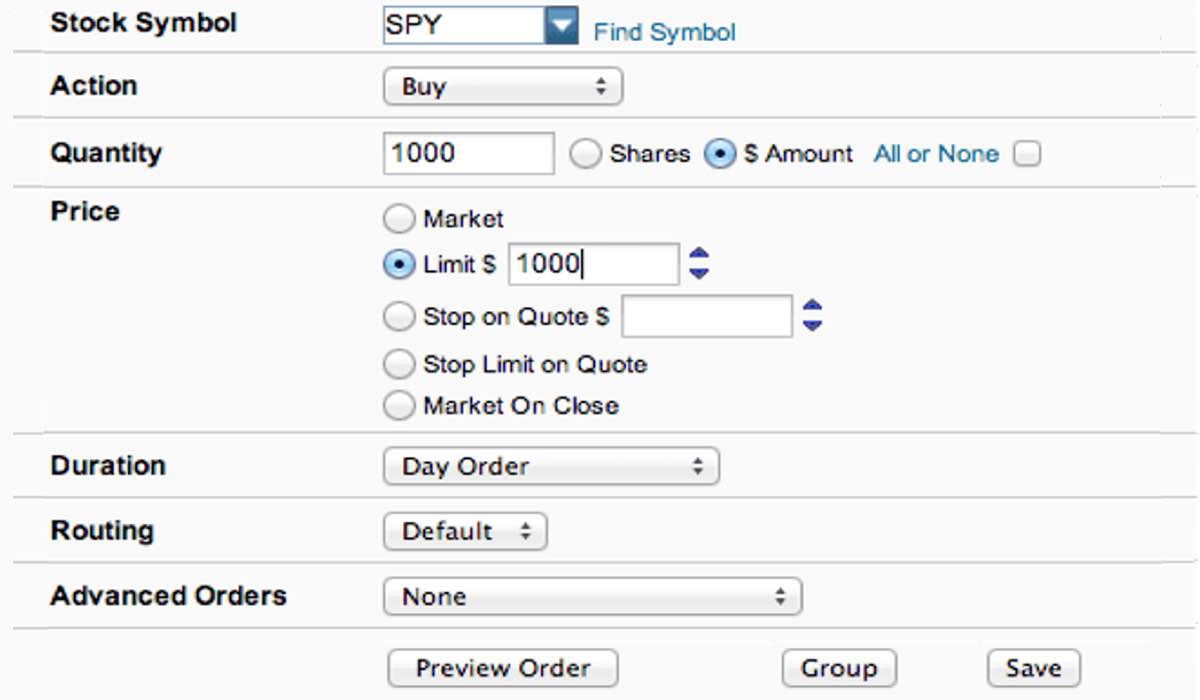
Some brokers will let you specify the dollar limit, and they will adjust the shares accordingly, as shown in the example below:
You want to remove as much human emotional behavior as possible from the decision-making process.
You'll see better results when you trade consistently according to a specific plan. That's because you will be taking money off the table at a profit rather than holding so long that things could turn against you.
You will also be dollar-cost averaging as you buy more shares at lower prices.
What Can Go Wrong?
Nothing is a sure thing. World events can negatively affect markets. If the stock or ETF keeps going lower and lower, you could invest $200 endlessly every month until you have no available funds remaining. And you may never have the opportunity to take money out at a profit.
Of course, the theory is that the stock market won't go to zero. But to be honest, one never knows. You may need to change your plans if a crisis, such as war, develops.
Remember This
When you have a gain and take it, it's a sure thing.
When you have a loss and cut it, you limit your portfolio from getting any worse.
That's a win-win situation by any means!
Was this article helpful?