
Updated Aug 20, 2026

Receive monthly dividends from rental income and benefit from property appreciation on properties you choose on the Arrived platform. Invest in fractional shares of real estate with as little as $100 and be a hands-off landlord.
Imagine investing in individual homes of your choice.
Furthermore, imagine if each investment was arranged in an LLC to simplify tax reporting and isolate investors from personal liability.
Then, imagine you could buy shares in that LLC in fractional amounts, as little as $100, along with other investors.
Also, imagine repeating that process with as many property LLCs as you wish. But with maintaining all those investments through a single account platform.
Finally, imagine getting a simple 1099-DIV showing the total taxable and non-taxable dividends received from rental income minus expenses. The non-taxable part is due to deductions for property depreciation.
That idea has arrived — with Arrived! Unlike mutual funds or Real Estate Investment Trusts (REITs) that offer a portfolio of assets, Arrived allows you to make your own selections and invest fractionally in single properties you choose.
Arrived was co-founded by Ryan Frazier (CEO), Kenny Cason (CTO), and Alejandro Chouza (COO) in 2019.
Shares in their first six properties were sold in March 2021. In June 2021, Arrived received an “A” rating from the Better Business Bureau.
In addition, Arrived received the backing of several prominent venture capital investors, such as:

At the time of this writing, Arrived offers three choices. You can mix and match among them or focus on one type that suits your desire.
Arrived is not a Real Estate Investment Trust (REIT). However, each single-family residential property is registered with the Securities and Exchange Commission as a REIT within an individual LLC.
The vacation properties are also in individual LLCs, but due to SEC regulations, they are not designated as REITs.
Since each property is held in an individual LLC, individual investors are shielded from personal liability.
Single-Family Residentials (SFR)
You can create a well-diversified portfolio of single-family homes by selecting individual properties when Arrived offers them for sale.
Even though they choose only the best 1% of all homes they investigate, you can still go an extra step with your own due diligence in selecting properties for your portfolio. I’ll discuss that later.
Short-Term Vacation Rentals (STR)
Arrived also purchases larger properties that are well-suited for vacation homes with short-term rentals.
Outside firms manage some, but Arrived began getting involved with in-house management to improve their ratings with Airbnb.
Single-Family Residential Fund
If you prefer to let Arrived build a diversified portfolio for you, you can invest in their “Single-Family Residential Fund.” This is a private REIT that combines a bundle of properties in a single fund.
I decided to invest with Arrived because I could select individual properties from their offerings based on my criteria. So, the Single-Family Residential Fund (which began in 2024) does not meet my needs.
Nevertheless, it’s a good choice if you want complete automation of the selection process. And it’s always available when you want to invest more.
Single-family homes and vacation rentals only become available when they find acceptable properties and get them approved by the SEC for sale to investors.

You control where your money is invested by selecting the properties you want to own. You can invest as little as $100 in any property, along with other investors. In essence, it’s a crowdfunding real estate investing platform.
The best way to invest in real estate is to diversify your portfolio. Fractional investing creates a mechanism to build a portfolio of multiple properties without the cost of purchasing entire properties.
You can open an Arrived account as a regular investment portfolio or as an IRA to invest in single-family residential properties. However, due to IRS regulations, you can’t invest in short-term vacation rentals in an Arrived IRA.
An accredited investor has a net worth of more than $1 million (other than primary residence) or an annual income of at least $200,000 ($300,000 for couples).1
Since Arrived has SEC approval to accept non-accredited investors, anyone can invest in real estate with as little as $100 with Arrived. You do not need to be an accredited investor.
Arrived has a Regulation-A classification with the Securities and Exchange Commission because they follow the rules and regulations designed to protect investors. Therefore, non-accredited investors can buy shares in individual homes through their service.
Arrived sells shares to cover the purchase costs and fees for each property. Real estate involves many business expenses. Fees are reflected in the share price at the offering, and ongoing costs are taken from rental income.
The projected dividend rate for each property takes ongoing costs into account. Therefore, you know ahead of time what to expect from each investment.
The following fees cover all costs of the business:
You can invest in individual properties by buying shares. When a property is initially sold to investors, its shares sell for $10 and can fluctuate based on appreciation. The minimum investment is ten shares ($100 per property).
You make money from the rental income and property appreciation prorated by the number of shares you purchased as follows:
1. Dividend Income
Dividends are paid from rental income and distributed monthly from all the cash flow after deducting operating expenses, such as property management fees, property taxes, insurance costs, repair costs, and reserves that are held for potential liabilities.
Arrived starts with a conservative dividend when each property is first offered. However, that is adjusted up or down later as the property’s performance supports it. All the details are listed in each property announcement.
Dividends are paid on the 25th of every month (or the next business day if the 25th is a weekend) and deposited into a virtual wallet. Investors can leave these dividends in their wallets for future property investments or transfer them to a linked checking account anytime.
I created a spreadsheet using the projected dividend rates for each property I invested in. When I received my dividend payments, they matched the amounts in my spreadsheet to the penny.
Future dividends may fluctuate based on changes in rental income and unexpected costs. However, Arrived holds an extra reserve in each LLC to help even out dividend payments in case of unforeseen circumstances with individual properties.
I see some people complaining on Reddit that they are unhappy with the payments they received. But they might be investing mindlessly in properties without doing any research.
Therefore, choosing properties with projected dividend rates you want to earn is important.
2. Real Estate Appreciation
All properties begin at $10 per share evaluation. Each property is revalued after six months, and the value of the shares is reset to the new valuation. After the initial six months, shares are revalued quarterly.
Investing in real estate must be considered for the long term. Any appreciation will be paid to investors upon selling the property, less the disposition costs.
Single-Family Residential (SFR) properties are expected to be held for 5 to 7 years.
Short-term Rental (STR) vacation properties may be kept for 5 to 15 years.
After deducting the cost of sale, the funds are then distributed to the shareholders of that LLC based on how many shares they own.
3. Early Redemption (Liquidity)
Real estate investing should be considered a long-term plan to reap the ultimate rewards of appreciation. However, some investors have been asking for the ability to cash out in case they need the money.
Therefore, Arrived has applied for SEC approval to allow investors to sell their shares to other investors if they want to cash out early.
This is now an active feature on the platform. However, it's best to hold until Arrived sells the property you bought shares in. That allows you to fully benefit from appreciation.

The Centennial was the first property sold after a three-year holding period during which it was rented out.
Investors earned a total of 34.7% on their investment. As with any property on Arrived, fractional shares were purchased with a minimum of $100.
Investors acquired The Centennial for $285,000 in October 2021. Arrived negotiated the sale of the property for $351,000 in October 2024 on behalf of the shareholders.
Here is how each share's investment broke down for the three years:
That's a 34.7% gross return, or an average annual return of 11.2%. This aligns quite well with my experience owning real estate, as my properties typically doubled in value every ten years.
Asset Allocation is one of the most critical aspects of building wealth. However, investors in the stock market don’t always consider this. They often focus on specific stocks instead of arranging a portfolio of index funds that include stocks and bonds.
The same can be said for Real Estate. Now that Arrived has allowed us to build a diversified portfolio, take a little extra effort when deciding which properties you want to buy shares in.
Check the neighborhood using Google Street View to do a virtual drive around the block and nearby streets. Search crime statistics and anything else you might be concerned about.
That extra effort can improve your satisfaction with the results you experience with Arrived.
When selecting the best area for real estate purchases, we repeatedly hear these words: Location, location, location. Although Arrived does an excellent job of selecting locations with high growth potential, things still sometimes go wrong.
I looked over all the properties listed on the Arrived website and noticed that roughly 3% have collection problems where the renter must be evicted.
I trust Arrived because of their transparency. Nevertheless, further improving the odds with due diligence is crucial. That is where we need to build our Arrived portfolio with Asset Allocation in mind.
When I told one of my friends that she could invest as little as $100 in a property with Arrived, she asked me how much she would make with that $100 investment.
When I answered by saying, “roughly forty cents a month,” she exclaimed, “Oh, that’s useless!”
When discussing investments, I once heard Warren Buffet say, “Doing it on a small scale is just as useless as not doing it all.” That’s what it means if you think like my friend who asked me that silly question.
Don’t bother with Arrived if you only intend to put $100 into a single property. The purpose is to create a portfolio of chosen properties that will pay ongoing dividends and gain on possible evaluation when each property is sold.
I prefer limiting my investments to $200 per property. That’s a safe way to build a diversified portfolio.
You might want to put more money into each property you select. The SEC allows individuals to invest up to 9.8% of the property’s purchase price in an LLC.
However, it’s better to spread your investments across numerous properties because it lessens the adverse effects of problems that could occur with any particular home.
For example, it’s a known fact that once in a while we could experience a renter failing to pay rent, and Arrived would have to evict. And that could take time.
As with any real estate venture, things don’t always go as planned. Renters might fail to pay rent or break leases. If Arrived needs to evict a tenant, it could take time before the property can be relisted.
Other issues can occur in the real estate business, such as storm damage that could cause downtime in renting a home or squatters that need to be evicted. It happens.
Arrived will take care of these issues without your concern. Nevertheless, it temporarily affects the profits.
That’s why diversification is crucial, and Arrived makes it easy to accomplish. When things go wrong with one property, they have little effect on your overall portfolio if you diversify.
Real Estate is a long-term investment. These are not liquid investments. They are meant to be held for five to ten years. This is not the right investment for you if you’re not willing to hold till they sell the property.
However, with SEC approval, Arrived added the ability for investors to sell their shares to other investors in a secondary market.
Some people can’t hold and wait, so they sell their investments at a discount. It’s possible they encountered life-changing events that required them to sell. So, I won't judge them for that change of their intent.
Meanwhile, others are picking these shares up at a discount and earning over 5% while holding until Arrived sells the property. Holding until the property is sold is the original intent that I encourage any investor in Real Estate to consider. That's when the gains really mature.
I begin by reviewing the info on the property. I like to select properties that pay nearly 5% dividends or better.
Then, I use Zillow to gather additional information, such as reviewing comparable homes.
Finally, I paste the address into Google Maps and do a virtual drive-by around the neighborhood with Google’s street view.
The benefit of investing with Arrived is that you get to choose the properties for your portfolio.
I’ll show you an example why you need to investigate any property you choose to invest in and why I like to go a step further and do my own research.
Even though Arrived only selects the top 1% of the properties they investigate, it’s still advisable to do your own research and due diligence. That can help improve your success with Arrived even further.
One property I almost invested in looked like a great deal. Compared to other recent sales on the same block with Zillow, I saw that Arrived got a great deal on the purchase. And that could mean investors will experience a rapid increase in valuation.
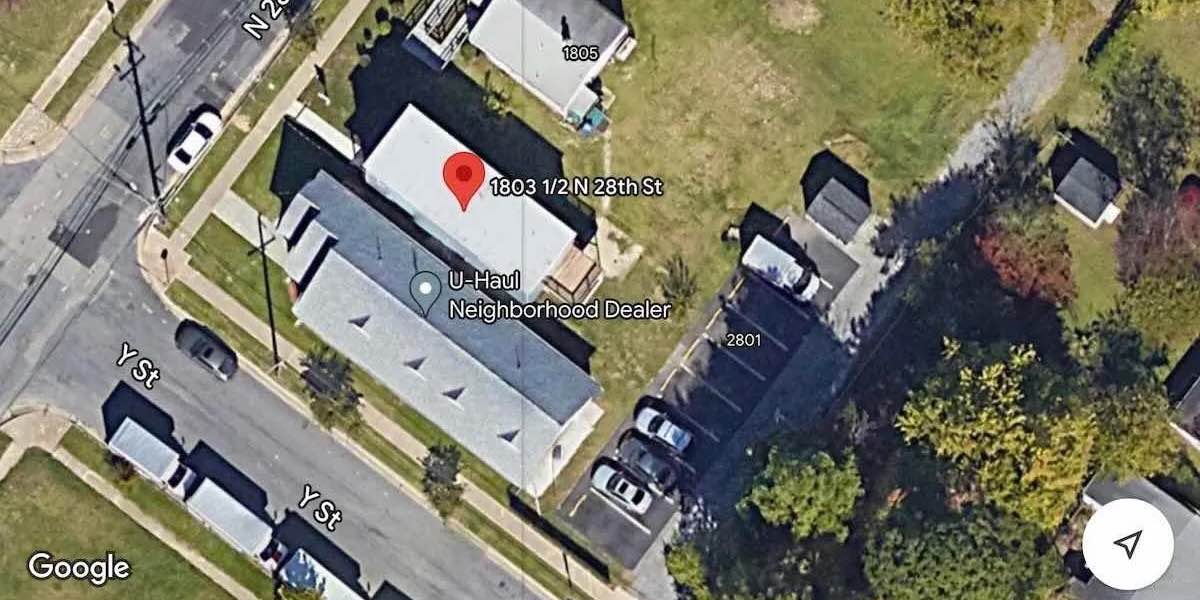
However, when I examined the property with Google Maps, I saw a U-Haul company right next door.
This property had a decent starting dividend of 5.2%, but I decided to pass on it because the view from the back deck is the U-Haul parking lot, as shown in the photo below.
Vacation Rentals could have off-season periods where no rental income is produced. For that reason, I prefer investing in single-family residential properties. But that is my choice, and you may have valid reasons to choose either or both for your portfolio.
To help make a decision, consider this: Vacation rentals could be subject to seasonality, which affects rental income.
Another point I considered is that Arrived single-family residential properties are taxed as a REIT, so you benefit from a real estate income deduction. The simplified 1099-DIV shows the tax-free portion of the dividends received.
Vacation rentals, on the other hand, do not have the tax benefits you have with single-family residentials. That’s because vacation rentals are considered ‘active’ income and do not qualify as a REIT. They are taxed as a C-Corp, where all income, including appreciation, is treated as ordinary income.
So why does Arrived offer the ability to invest in vacation properties? They may pay a higher dividend since short-term rentals cost more for lodging by the week or month.
But there is another issue. Finding a decent management company is challenging. I read several negative reviews people left on Reddit about some of the Arrived Vacation homes:
The senior customer marketing manager, Korin Hedlund, posted on Reddit that they are solving these problems by transferring vacation property management and including in-house management to be more directly involved with some vacation properties.2
Arrived handles every aspect of property management. So, investors can concentrate on building a diversified portfolio for passive income without being concerned with crucial management tasks.
Each property offering collects more money from selling shares than the cost of the property. That assures a reasonable cash reserve to cover expenses for repairs and anything unexpected.
The cash reserves also cover vacancy periods, so real estate taxes, insurance costs, and other ongoing expenses can continue to be paid.
The investors own this money, so any remaining will be included in the final disbursement when the property is later sold.
Investors are taxed on the rental property profits. That is derived from the rental income minus expenses and depreciation. Expenses include insurance, repairs, property taxes, and management costs.
Depreciation is a write-off that the IRS allows investors to take to reduce their taxable income by deferring the tax until the property is eventually sold. Then, at that time, the IRS requires recapturing the deprecated amount. Depreciation is recaptured by reducing the cost basis when the property is sold.
Tax Filing Is Easy
I used to invest in public REITs and always found it a nuisance to enter all the data from the K-1 when doing my taxes. For that reason, I don’t like REITs.
However, Arrived is different. While it’s true that they create a REIT for each of their single-family residential properties, they place those REITs in an LLC registered with the SEC.
With Limited Liability Corporations, the tax information is reported in a single consolidated 1099-DIV, so copying the data from the boxes showing taxable and non-taxable income to your 1040 form is straightforward. That’s much simpler than a complex K-1.
And you still benefit from real estate depreciation since the 1099-DIV shows that portion as non-taxable income.
It’s also good to know that you do not need to file out-of-state income tax reports for your investments with Arrived. You can invest in properties in multiple states, and you’re only required to file the Federal tax return and your own state’s tax return (if any).
The following video explains in detail why an LLC provides easy tax reporting compared to public REIT investments.
heir transparency was the most critical thing that convinced me to invest with Arrived.
When I did my initial research, I found several online platforms that did a similar type of business. Arrived’s website had the most information with everything good and bad about their business. I consider that the most crucial thing when it comes to trust.
You don’t even need to create an account to see all the details on each property. That information is there for your scrutiny on all their properties without logging in. Nothing is hidden from view.
That is how I was able to gather all the information about the problems they ran into, such as evictions and other tenant issues. It’s all there, listed under each property description.
They also show the data history of all properties under the “Historical Returns” tab. For each property, it shows the market, months held, total returns, appreciation, annualized rental income, and estimated share price.
Weekly Live Webinars
For even more transparency, I find their live webinars immensely informative. They are scheduled on Tuesdays and Fridays.
Everyone can attend and ask questions via chat. You don’t need to be an investor or have an account with them. Some people ask the most incriminating questions, and nothing is censored, not even from the replays.
Before investing with Arrived, I made a list of the pros and cons. That helped me visualize both sides of the issue.
Pros:
Cons:
Signed documents are available online for each property you invest in. If you prefer to keep a copy, you can print each investment document or save it as a PDF file.

How much must I invest to get a $200 monthly income?
The average dividend varies depending on what properties you choose to invest in. Some pay more and some less.
At 5%, for example, you would need to invest $48,000 to receive $200 monthly. That does not include any additional profit from appreciation once your properties are sold.
What is the maximum amount that someone can invest in one property?
Each property is arranged as a REIT for tax purposes. To qualify as a REIT, the SEC does not allow any single investor to own more than 9.8% of its equity. So that is the maximum limit.
Do I have any liability if something goes wrong?
No. Each property is held in an LLC that shields you from personal liability. In addition, each property is insured to cover loss, including loss of rental income if damages cause downtime.
Do I have the same tax benefits as I would if I managed my own rental house?
Yes. You’ll receive potential net rental income monthly. You’ll also have favorable tax benefits such as long-term gain tax treatment on appreciation when the property is sold and a tax-free portion of the dividends due to IRS-declared property depreciation.
Are the fees taken out from my attached bank account?
No. The fees are deducted from the rental receipts, and the remaining net income is paid to you as monthly dividends.
What if there is no rental income due to storm damage or other unforeseen circumstances?
Each property LLC holds an additional cash reserve to cover unexpected expenses.
But what if it gets so bad that it goes negative? Will I be responsible for paying extra money to carry a specific property?
No. In that case, Arrived would lend money to the individual LLC to cover that. Once the LLC makes money again with a new rental, it will pay that loan back to Arrived. The individual investors will never be liable.

Although dividend income is nice, my main reason for investing in real estate with Arrived is the potential for appreciation. So, allow me to share my reasoning on this matter as a final takeaway.
Looking over the historical performance posted on Arrived website, I noticed the first properties Arrived made available for investment have more than doubled in appreciation in two years.
For example, when I reviewed the historical performance for Northwest Arkansas, in 26 months, The Lierly appreciated 127%, and The Soapstone appreciated 120%.
However, although Arrived does extensive market research to select areas with the best growth potential, you still need to do your due diligence when choosing properties you want to invest in because nothing is guaranteed with any investment.
For example, properties in Nashville have had a 10% to 13% loss in appreciation. But that could be misleading because those losses are on properties held for less than a year. So, it’s essential to understand that properties held longer have more time to appreciate.
Nevertheless, that goes to show why it’s crucial to diversify. No one can be 100% accurate in predicting investment outcomes. And that is why I like the ability Arrived developed to build a meaningful investment portfolio.
Arrived listens to its users’ requests and recommendations. Therefore, they are continually growing and adding new features. Many new options require SEC approval, which takes time to deliver, but they share information about it in their weekly user webinars.
Since I first wrote this article, the following features have been added to the Arrived platform.
Years ago, I bought a rental property in my town and rented it out as an investment. I had negative cash flow in the first year. That was because my expenses were more significant than the rental income.
I found it challenging to find a property that was cash flow-positive in the first few months. When I ran the numbers in a spreadsheet, I had to consider the cost of closing costs, real estate taxes, insurance, upgrades, and maintenance expenses.
I also had to consider downtime due to vacancies. But even with that due diligence, I still experienced surprises that affected my cash flow.
I wish I had known about Arrived back in those days. But then again, Arrived didn’t exist at that time. But it does now, and I am taking full advantage of it.
While it’s true that any individual property can have problems, by diversifying with small investments in each of many properties, anything that goes wrong with one property will not have an extreme effect on our overall portfolio. That’s the advantage of fractional investing in real estate.
Was this article helpful?

