Last updated June 13, 2026 — Revised for better clarity.
I'll show you how to analyze your DNA test results to discover potential health risks and learn about your family history going back hundreds of years.
Your DNA holds the secrets of your ancestry, dating back hundreds of years. It can help you uncover health issues and alert you to potential health risks. You'll even learn why you behave as you do.
I used 23andMe to test my DNA and learned a lot about myself, which uncovered answers to many questions about my life. So, I'll tell you what you can learn too.
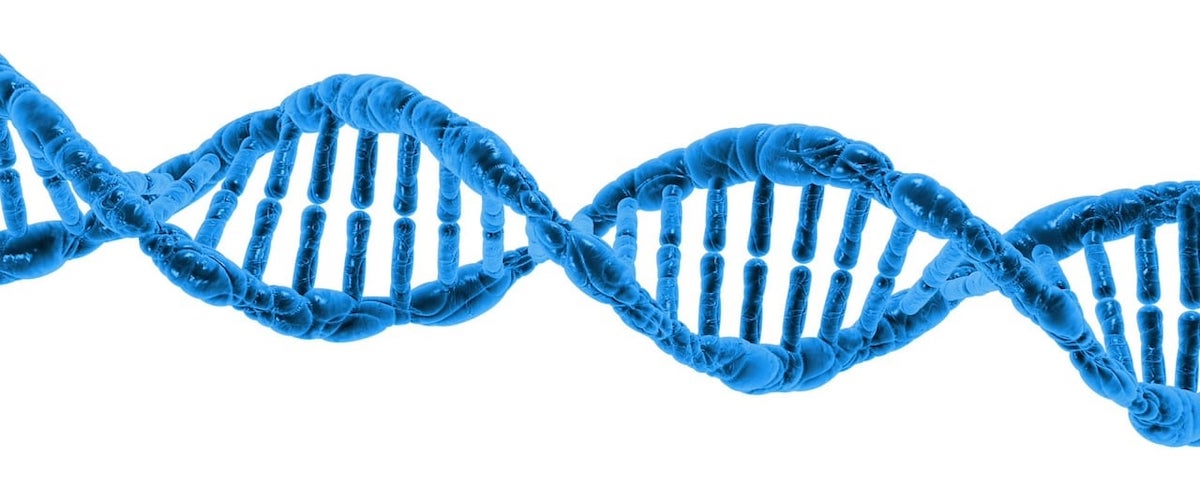
DNA is short for Deoxyribonucleic Acid. It was discovered by Friedrich Miescher in 1869, but it wasn't until 1953 that James Watson and Francis Crick identified its molecular structure.
DNA is the carrier of genetic information that describes how living organisms develop. Genes are arranged in long strands of tightly packed DNA called chromosomes. They are the basic physical units of inheritance.
Human DNA has 23 pairs of chromosomes—one from each parent, totaling 46 chromosomes. That includes two sex chromosomes (X and Y).
The chromosomes contain hundreds of genes that provide the instructions for making proteins. These proteins instruct various cells of the body to perform in different ways.1
To say it another way, our DNA holds the exact data that describes how every cell in the body works, and how they form various parts of our bodies. For example, you have five fingers on each hand because your DNA instructs the cells to grow that way.
I chose to get a test kit from 23andMe because I read that they have the largest DNA database based on the Human Genome Project.
My sister wanted to test her DNA to learn about her ancestry. So I did it too, to compare our information. The results were fantastic! I learned more than my parents ever knew about our family history, even going back 800 years.
I also learned interesting correlations between my sister and me. This information gave us a better understanding of the issues we had growing up. But this article isn't about me. The purpose of this article is to show you how to analyze your results.
The Human Genome Project
The Human Genome Project does research to provide precise indicators of the functions of various genes. In addition, they are helping to discover methods to fight disease through Gene Therapy.
The Human Genome Project has been working on creating a chromosome map of our genetic blueprint by analyzing DNA from many people.
Collecting DNA data from an increasing number of people helps lead to a better understanding of various gene mutations and how they affect our health. This process is so common now that anyone can have their DNA analyzed and receive a detailed report on their ancestry and genetic future health risks.
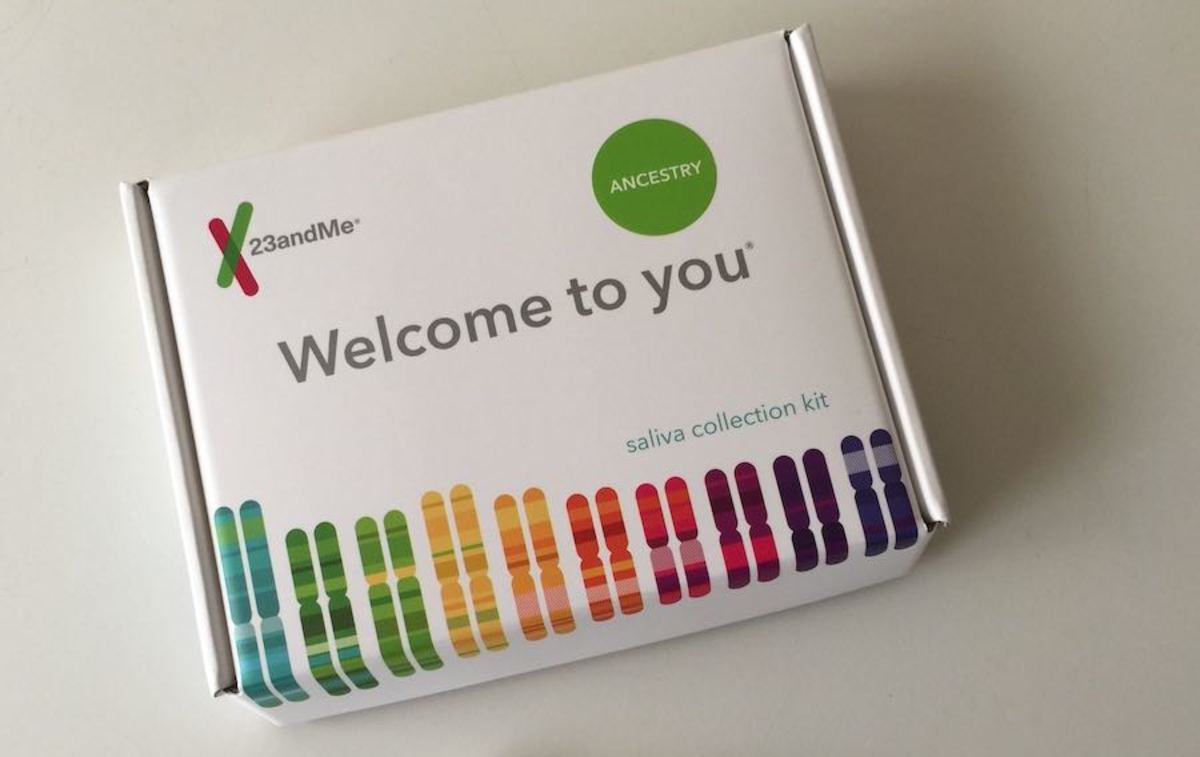
How to Get Your DNA Tested It's easy to provide your DNA via a saliva sample. You spit into a saliva collection tube and mail it back to the lab. Then, after the analysis is complete, you can view your report online.
Your saliva sample is coded for privacy reasons. You need that code to access your report since the submission is anonymous.
Saving Your DNA for Future Comparisons
You can always start with the ancestry study, and if you decide you want a complete analysis of your health and possible diseases, you can order that later for an extra fee.
They save your DNA if you allow that option, so you don't need to send another sample. Also, if you let them keep your data in the database, future comparisons can be made as more people send in their DNA for testing.
I once received an email from 23AndMe saying they found someone who matched my DNA. I thought some prior girlfriend had a baby just after we broke up and didn't tell me. When I checked the details, it turned out to be my sister. Duh! But of course.
That shows how well the procedure works. Our submissions were anonymous. So there was no way they could have related us to one another, other than by our DNA.
As I mentioned, when you send in your saliva sample, it's coded with a number that only you know.
If you're concerned about privacy, you can opt to have them destroy your DNA after the initial analysis. However, I enjoy the advantages of saving it, because as more people have their DNA analyzed the data goes into a common database.
They might notify you in the future that a distant cousin has been found. How cool is that?
Once again, for privacy reasons, 23andMe lets you opt out of sharing information to find future relationships if you don't want that option. It's your choice.
It's easy to find out which genes are related to specific health issues. I searched Google for the genes associated with some diseases and disorders. Then I just typed that genome name into the search field under the raw data page on my 23andMe account.
Here are a few examples in the table below:
| Disease/Disorder | Gene |
|---|---|
| Alzheimer's Disease | APOE |
| Cancer | PRAC1, BRCA1, and BRCA2 |
| Prosopagnosia (Face Blindness) | OXTR |
| Chron's Disease | CD39 |
| Parkinson's Disease | PARK8 and LRRK2 |
| Tourette's Syndrome | SLITRK1 |
23andMe provides a raw data file that you can download for additional research. But you can also search your raw data online to find specific genes without downloading.
It's easy to search Google for any disease to find the gene involved. What matters is if you have a mutation of that gene, which affects the specific cell's ability to function normally. These are also considered variants of the gene.
A Google search will also bring up useful information detailing the aspects of the gene mutations and how they relate to the disease about which you're seeking information.
Once you know the gene, you can search your raw data file online to see if you have the mutation.
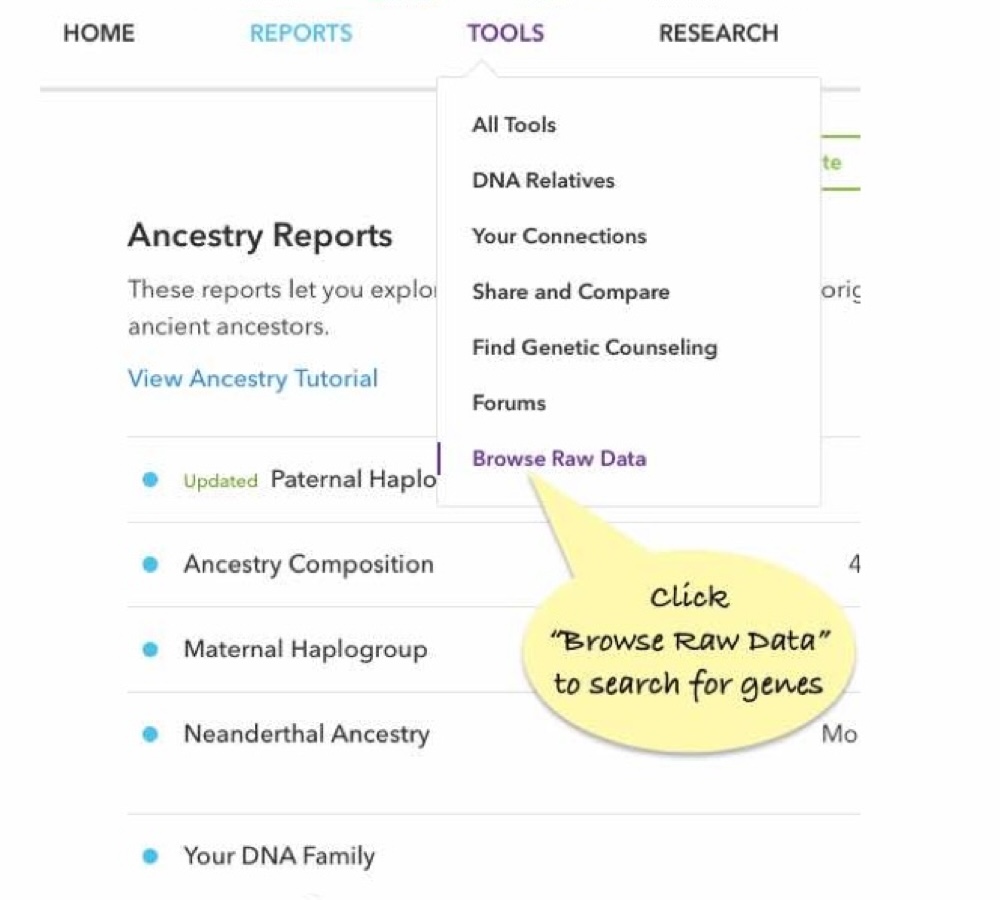
I'll describe the gene mutations of several diseases and ailments I have researched. The data from the Human Genome Project goes into enormous detail. I'll give you a summary of each below.
Alzheimer’s Gene Mutation
The presence of Alzheimer's can only accurately be confirmed with an autopsy. However, recent innovations at the University of Pennsylvania allow detection during one's lifetime by taking the cerebrospinal fluid from the spinal column with a syringe.
Detection of amyloid, and a protein known as tau in the spinal fluid, are markers for Alzheimer's. DNA studies also provide evidence of a gene mutation related to the late onset of Alzheimer's.
The APOE Gene is much more complex than I will get into here. But one variant of its mutation is known to be related to the risk of Alzheimer's disease.
Some people with that gene mutation never develop Alzheimer's, and some people who don't have the mutation do develop it. Therefore, the present research indicates that other things may cause it. The genes only suggest a risk factor.2
Cancer-Related Genes
We all have these genes that help suppress tumors that may become cancerous. They are part of the human genome. However, if these genes mutate, then their ability to protect us is hindered.3
Here's a quick explanation of these cancer-related genes:
Chron’s Disease Gene Variant
I tend to have Irritable Bowel Syndrome, a gastrointestinal disorder that rarely affects me but can flare up when I'm under stress. For this reason, I wondered if I might develop Crohn's disease later in life because it's related.
I searched for that gene in my DNA. A variant of the CD39 gene is associated with Crohn's. 6
Lucky for me, I don't have that variant.
I think it's good to know these things because when you know you're susceptible to a disorder, you can research proper ways to stay healthy by avoiding anything that can aggravate it.
Parkinson’s Disease Gene Mutation
I hear stories about people who develop Parkinson's later in life, such as Michael J. Fox. So I thought it would be good to know if I might have that gene mutation ahead of time.
An autosomal-dominant mutation in the LRRK2 gene can put one at risk for Parkinson's disease.7
Two of the most common variants associated with a significantly higher risk for Parkinson's are the LRRK2 G2019S and GBA N370S mutations, so those are what you'd want to look for when you search your raw data for the LRRK2 gene.8
Tourette’s Syndrome Possible Gene Mutation
Little is understood about this. It could be as minor as merely having minor physical ticks.
In a 2005 issue of Science Magazine, I read that a gene mutation could be linked to Tourette's syndrome. A mutation of the SLITRK1 gene appears to lead to Tourette's syndrome in some people.
This gene is in the cortex and the basal ganglia. Two areas of the brain that might be associated with Tourette's.9
Prosopagnosia Gene Variation Causing Face-Blindness
I always knew I had trouble recognizing people until I had met them a few times.
There is a scientific name for it: Prosopagnosia . Mine is congenital, which means it's inherited. It can also be brought on by a brain injury later in life. A variation of the oxytocin receptor gene (OXTR) is responsible for the congenital version of this condition.10
When I was a child, I noticed that my father always said hello to every stranger he passed on the street. Now I realize he must have had Prosopagnosia too, which was his way of dealing with face-blindness to avoid embarrassment. Aha! He had it also.
It's embarrassing to meet someone a second time and not know who they are. But I'm okay after meeting someone more than two or three times, so I deal with it.
My sister found this gene in her DNA, too. We both have had embarrassing situations when people would wonder why we didn't say hello the second time we ran into them. It's just a brief nuisance, though. We both recognize people after meeting them a few times.
Finding this in my DNA helped me understand why I have this problem.

The growing knowledge of genes and their involvement with genetic diseases and disorders is creating a revolution in human genetics and medical research.
This knowledge provides the opportunity to diagnose and treat genetic diseases.10
In addition, scientists are finding methods to edit DNA in human embryos to fix a mutated gene and disable the development of a specific disease.11
According to an article in Psychology Today, a research study known as Epigenetics has shown that gene expression can be turned "on" or "off" by external factors. When we lead a healthy lifestyle with a proper diet, less stress, and exercise, we can turn off genes that cause disease.12

Since the discovery of DNA, genetic information has given scientists the ability to develop phylogenetic trees that show how various organisms are evolutionarily related.13
Gene mutations cause changes from one generation to the next.
Some of these changes are useful for the evolution of the species, leading to improved survival methods. For example, genetic mutations caused giraffes to evolve with long necks to reach fruit high in trees.14
Gene mutations can also cause undesirable results, however. For example, a minor variation of the genes that normally instruct our bodies to grow five fingers can cause a person to have six fingers. That is called Polydactyly.15
Six fingers may not be damaging, but other mutations can cause genes to malfunction in ways that result in life-threatening diseases.
You can purchase a personal genetic DNA test kit from 23andMe on Amazon. They have two kits you can choose from.
If you don't want to see your health information, as some people would rather not know, you can just discover your ancestry going back hundreds of years with the first kit below.
With any of these kits, you will learn crucial information you would not have known otherwise. And you will benefit from the research to discover your DNA history and future destiny.
Was this article helpful?