
I'll begin by discussing what led up to the diagnosis of glaucoma and what my ophthalmologist did at first.
Then I'll explain how he later used a laser to keep my glaucoma under control without the need for eye drops.
Finally, I'll tell you about my post-treatment period and how I'm doing now.
I had complained to my ophthalmologist from time to time about eye pain. However, he never diagnosed glaucoma because my pressure was normal every time he checked it.
That can be very misleading because, as I found out, my pressure spiked randomly. My doctor explained to me that some people have occasions where the pressure spikes and then returns to normal.
Then one day, I suddenly lost sight in my right eye. I ran into the bathroom and looked in the mirror to figure out what was happening. I closed my left eye, and I couldn't see a thing with my right eye.
In less than a minute, I began to see a faint reflection of myself in the mirror, with my right eye. My site was coming back. The entire episode lasted just a couple of minutes.
Good! At least I wasn't blind. But what the hell just happened?
"This is not something to ignore just because I can see again," I thought to myself. So I immediately called my eye doctor. He asked if I could come right over. I did.
When I got to my ophthalmologist's office, he checked my eye pressure. It was 40 in my right eye. Normal eye pressure is around 12 to 16. He said, "Now we have a diagnosis. You have glaucoma." And he told me that my pressure must have been even higher an hour ago when I temporarily lost my sight.
He gave me eye drops to lower my eye pressure, and he would not let me leave his office until my eye pressure came down. He also gave me a prescription for the drops to use at home.
Glaucoma can damage the optic nerve due to increased pressure and needs immediate attention.1
The eye drops help control the pressure, but a more permanent method uses a laser procedure that an ophthalmologist can perform in their office. It's called laser iridotomy.2
A person with glaucoma needs to continue to use medication to keep the pressure under control. If pressure is too high for an extended period, blood cannot get to the optic nerve, and the nerve will die.
The optic nerve dies from the outer edges first. If glaucoma is left untreated, one will notice that they are losing their sight from the peripheral vision first. Then it continues to close in until one feels like they are looking through a tunnel.
That is known as tunnel vision. The only part of the field of vision that's left is in the center. If one continues without treatment, they eventually lose that central view too.
I was lucky.
In my case, blood started flowing back in within a minute. Brain cells are damaged due to a lack of oxygen in about four to six minutes in situations where blood flow is interrupted. That includes the optic nerves as well.3
My doctor told me that if my eye pressure stayed high for just a little longer, I might have had partial damage to my optic nerve.
My doctor gave me peripheral vision tests once a year for a few years after that to be sure I was not losing peripheral vision.
I was okay because we caught my glaucoma in time. Now I had to use eye drops to keep the pressure under control.
A year after my incident, my doctor told me about the laser iridotomy procedure. He explained that this treatment is for people with narrow-angle pigmentary glaucoma, which is the kind that I have.
There are many different types of glaucoma, and this procedure doesn't work for all of them. It doesn't work for open-angle glaucoma.
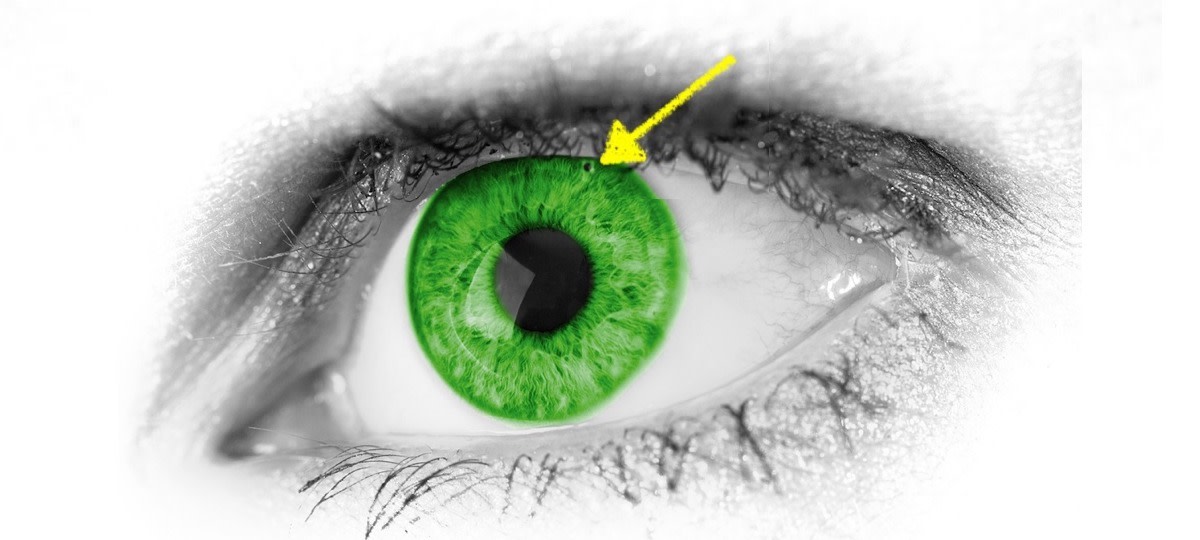
The laser makes a small pinhole in the iris (the colored part of the eye). That serves two purposes:
After the treatment, I would no longer need to use eye drops to control the pressure.
I researched it before deciding to go ahead with the treatment. I took home some leaflets to read, I bought a book on the subject, and I read some research on the web. After all my due diligence, I felt comfortable enough to go ahead with the procedure.
My doctor scheduled me for the treatment to be done right in his office.
He spent what felt like an hour preparing me and explaining how it worked. The rest of it was over in no time.
Even though the treatment was complete, he kept me there in the waiting room since he needed to check my pressure an hour later. It was fine.
I felt no pain and was able to drive myself home after that.
Before the procedure, your doctor gives you drops that make the pupil small. That causes the iris to expand so the doctor can find the best place in the pigment to aim the laser.
Contraction of the pupil may cause a mild headache, but it doesn't last long. However, if you have an ongoing headache, or worse, if you become nauseous, see halos, or have eye pain, your angle may have closed up again. I didn't have any of those problems, and my procedure went well.
A narrow angle is one of several causes of glaucoma. The laser makes a pinhole in the iris. That procedure widens the angle to allow drainage, which keeps the pressure in the eye at a normal level.
If the angle closes up, you might need a second procedure. In a few cases, laser iridotomy doesn't work with the first attempt. Mine did.
Your doctor should schedule a follow-up to check your pressure. If your pressure remains high for an extended period, you could lose your vision. That is why we need to monitor and control glaucoma pressure.
My doctor prescribed a medication (drops) that I had to put in my eye each day for a week to keep it from getting infected. He also told me to be careful not to get water in my eyes while showering.
After the procedure, I no longer needed to use eye drops to control the pressure. It continued to be normal, around 16. I continue to have it checked annually, and over 20 years later, I'm still okay.
A couple of years after the first incident, my doctor found the pressure in my other eye was starting to increase. He asked if I wanted to do the same laser treatment, just to be safe.
I was lucky with the right eye. If my pressure happens to spike randomly in my left eye, we may miss the diagnosis until it's too late.
I was so satisfied with the results of the first procedure that I decided to have it done to my left eye too.
During my annual ophthalmology checkups, my doctor checks the pinhole created by the laser to be sure it's still open. If it should ever heal shut, the laser iridotomy could be done again.
Now, over two decades later, my pressure has always been around 15 or 16, which is normal. I never needed to use eye drops anymore. It's as if I don't have glaucoma anymore.
Was this meaningful to you? Tap