
Last updated April 14, 2026
Your check engine light is on, and your mechanic said you need a $900 catalytic converter replacement.
You may even feel pressured because you need to have an annual inspection soon, and your vehicle won’t pass unless you get your catalytic converter repaired.
A few of my friends already had this experience, and they paid over $900 for a new catalytic converter. However, I found an alternative solution that worked for me and also for a few friends.
When the check engine light is on, your mechanic may not tell you that it might just be a malfunctioning sensor. Or the catalytic converter may be full of gunk. It’s not that they are lying to you. They really don’t know.
If you spend $900 or more to replace the catalytic converter, you may discover the check engine light comes back on again later.
Some mechanics will tell you to try replacing the oxygen sensors first to see if that solves the problem. There are two of them, one before and one after the catalytic converter. That's necessary to detect catalyst efficiency.
A good mechanic might test your system with a scope to diagnose the oxygen sensors. Or they may do a vacuum test or backpressure test, and charge you a fee for the diagnostic service so you can decide what you want to do as far as repairs are concerned.
So what do you do? Do you order numerous tests? Do you spend less money at first on new sensors? Then, if that wasn’t the problem, do you spend more money later for a new catalytic converter?
Read on, and I'll tell you what I did and what you should do before spending money on repairs you may not need.
I'll review both of these suggestions in detail next. Let's begin with a quick explanation of the purpose of the catalytic converter.
Then I'll tell you what the check engine light indicates when it's on, and if it's a trouble code indicating a potential problem with the catalytic converter.
Finally, I'll tell you what I did to avoid spending a lot of money buying a new one.
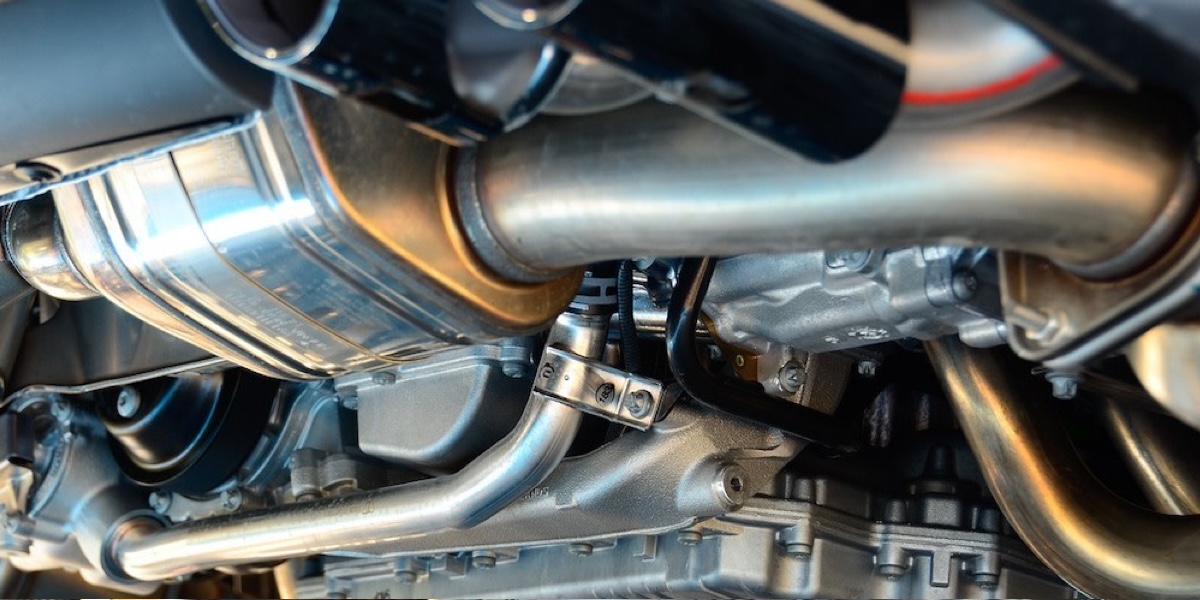
The catalytic converter is in line with the exhaust between the engine and the muffler. Its purpose is to reduce emissions coming from the exhaust.
The check engine light will come on if it’s below this threshold, determined by oxygen sensors that are located before and after the catalytic converter.
The sensors will trigger an Onboard Diagnostics (OBD) trouble code that’s stored in your car’s computer.
The Check Engine Light (CEL), also known as the Malfunction Indicator Lamp (MIL), indicates that a specific sensor has reported a problem.
Sensors pass vital information to the PCM about the condition of the parts that they monitor. The PCM analyzes the data to determine if the parts are functioning properly.
In some rare cases, the CEL will flash repeatedly. That indicates a problem that needs immediate attention, such as an engine misfire that can cause significant damage.
OBD Code P0420 means the catalyst system efficiency is below the threshold. It's a generic code—meaning that it applies to all models of vehicles built since 1996.
That is the most common reason for the check engine light to appear, although other problems can occur. Each one has its own unique OBD trouble code. However, I’m going to tell you about an easy method of solving the problem that you should try first when your catalyst system is the culprit.
When a mechanic sees error code PO420, they will tell you you need a new catalytic converter. This trouble code appears when the unit can’t sufficiently reduce the carbon emissions coming from the exhaust. However, a catalytic converter does not normally wear out. There is usually some other reason for their failure.
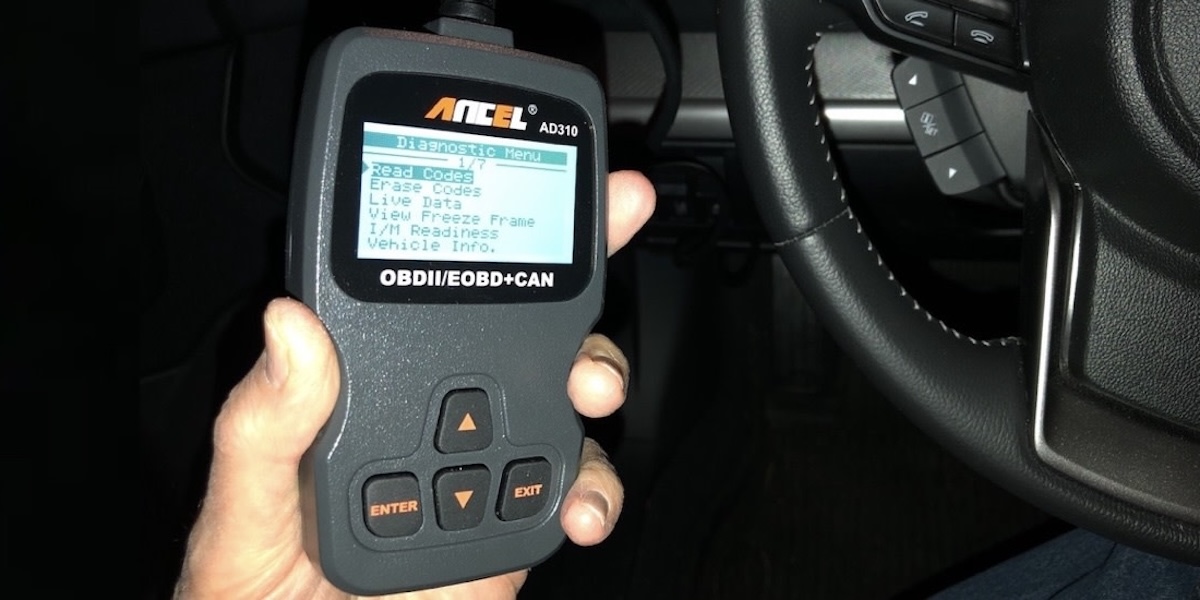

When my check engine light came on, I knew I needed to know the diagnostic code before going to a mechanic's shop. That's the OBD trouble code stored in the car’s computer.
So, I bought an OBD diagnostic scanner on Amazon . You can get one for under $40. It works with all vehicles sold since 1996. Since then, all cars have had to be OBD-II compliant.
If the code is PO420, then the issue is with the catalytic converter. However, it may simply be a bad sensor and not the unit itself. Or the unit might be full of gunk from years of exhaust passing through it.
I discovered a way to clear that gunk out. I'll explain that next. It's worth trying before spending money on a new catalytic converter.
There is a possibility that the catalytic converter’s efficiency is compromised by oil deposits or other contamination, water from bad gasoline, or the build-up of gunk from years of exhaust passing through it.
I found an easy method to clean it out so that it registers a good catalyst system efficiency again. However, my method only works if the catalytic converter is malfunctioning due to contamination. It's worth a try with the following four easy steps:
Step 1: Fill Up Your Tank With High-Octane Gasoline
So how do you clean it out? When you’re down to almost an empty tank, fill up with a full tank of high-octane gasoline. Higher octane usually has more additives and better detergents that help clean out the buildup of contaminants in the catalytic converter.
It might also be possible that you had previously gotten a bad tank of gas, possibly with water mixed in. That can reduce the catalyst's efficiency, too. High-octane gasoline might have better results with a cleaner mixture, or you can try getting your gas from a different gas station.
When you try my method, don't fill up if you have a lot of gas in your tank. That will dilute the gas, and my method won't work. You only need to do this once.
Step 2: Drive Until You've Used Up Half the Tank
When I did it, I just did my usual driving. In a couple of weeks, I used up half the tank. There's no rush, no need to drive endlessly in one session.
Step 3: Shut Off the Check Engine Light With Your Scanner
After you've driven with high-octane for a couple of hundred miles, shut off the check engine light with the diagnostic scanner like the one I use.
Step 4: Continue Driving and See If the Light Comes Back On
Now, continue driving as usual for a week. If the check engine light continues to stay off, you’ll know it was only a contaminated catalyst system. The high-octane gas actually cleaned it out.
It's worth trying to clean the gunk out of the catalytic converter before spending a lot of money on repairs. This method helped me avoid replacing the catalytic converter in my 20-year-old Honda. I've done this twice. Each time it lasted several years.
When it happened again, I filled up with high-octane, and the problem was resolved once again. The light never came back on, and I passed inspection.
Yes. You’re not doing anything to fool the system when you bring in your car for a state inspection. So why would this be illegal? You simply helped your car’s catalyst system perform to the required specs again by clearing the contamination.
I'm sure it doesn't help in all cases, but it worked for me and several of my friends who had the same issue.
If the light eventually comes back on, you might have a more serious problem. You might need that expensive replacement. However, there are still other reasons for a trouble code P0420. Such as:
At least you'll know for sure that you ruled out contamination, which I found to be quite common among my friends who saved money by following my method.
If you do end up getting a new catalytic converter, make sure you get one that meets your state's requirements, or else you may find the check engine light coming on again. The safest thing is to get an original manufacturer brand or one that is legal for all 50 states.
When sensors fail, it is usually intermittent. A useful experiment is to clear the codes and watch to see if the check engine light comes back on. Code scanners can also be used to clear the codes and reset the PCM.
Sometimes a sensor will fail, or get stuck, and report a false code. An honest mechanic will tell you that. Replacing a sensor is not that expensive.
A recurring OBD code after a repair might mean that it wasn't the replaced part that was bad. If you had an expensive part replaced, ask the mechanic if they tested the sensors or if they examined the vehicle for other causes of the error condition.
If you had only the sensors replaced, the part that the OBD code refers to is most likely malfunctioning and needs to be replaced. However, a good mechanic will also check the wiring to the part in question. Damaged wires can also contribute to a misleading error condition.
If your check engine light comes on, the problem could be intermittent, with a sensor going bad.
If you clear the code yourself with your diagnostic scanner and the light never comes back on, you'll know it was just an intermittent problem. That happened to me, and I never had to have anything repaired.
Sometimes, the code eventually clears on its own, and the check engine light goes off. But it may retain a history, which will cause your next state emissions test to fail.
So, even if the light is turned off, checking it with a diagnostic scanner will assure you that you're good to go before bringing your car in for a state inspection.
After you reset the check engine light with the diagnostic scanner, the car’s computer will indicate a “Not ready” status until you’ve driven for a while. That usually resets after 50 to 100 miles.
If you go for the inspection before the system indicates “Ready,” the inspection will fail. So before you go for the inspection, attach your diagnostic scanner and check the system status.
There Are Three System Status Conditions
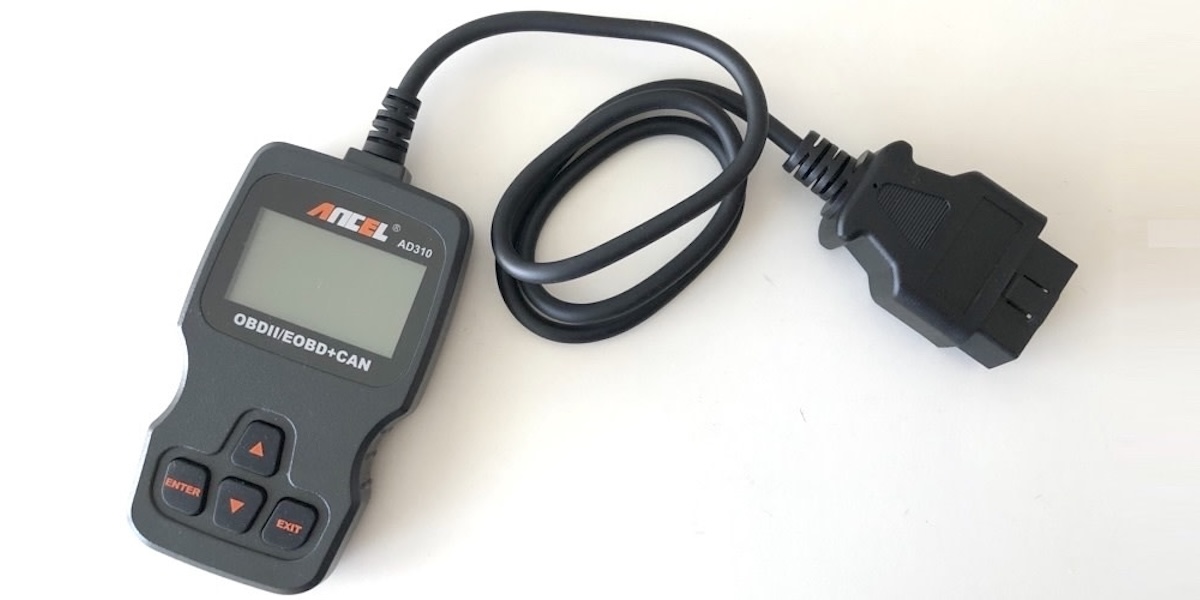
The OBD diagnostic system covers many trouble points that can go wrong. The scanner's display clearly shows the trouble code and indicates which device is malfunctioning.
Some mechanics charge you to do the same thing, and you’re still no better off. Catalytic converters should be diagnosed using proper methods involving more than a code reader. However, I feel it’s a no-brainer to be able to read my car’s computer diagnostic trouble codes by myself, so I have an idea what’s going on.
Once you have your own tool, similar to the diagnostic scanner that I bought on Amazon , you can always check your emission system’s status yourself. There is no need to pay a mechanic for a needless reading or get suckered into a repair job you may not need.
The way I look at it, getting your own scanner is a small price to pay to do your own review of what's going on with your car. Having a good mechanic you trust is still crucial, but it's nice to know what's happening and to do something about it before spending a lot of money.
It's easy to use. Just connect it to the OBD-II Data Port under the dash. It's on the driver's side in most vehicles. It uses power from the data port, so no batteries are needed.
When you plug it in, it will tell you to set the ignition on (that is, without the engine running) and then press any key to connect. It then takes a few seconds to link with the vehicle, as shown here:
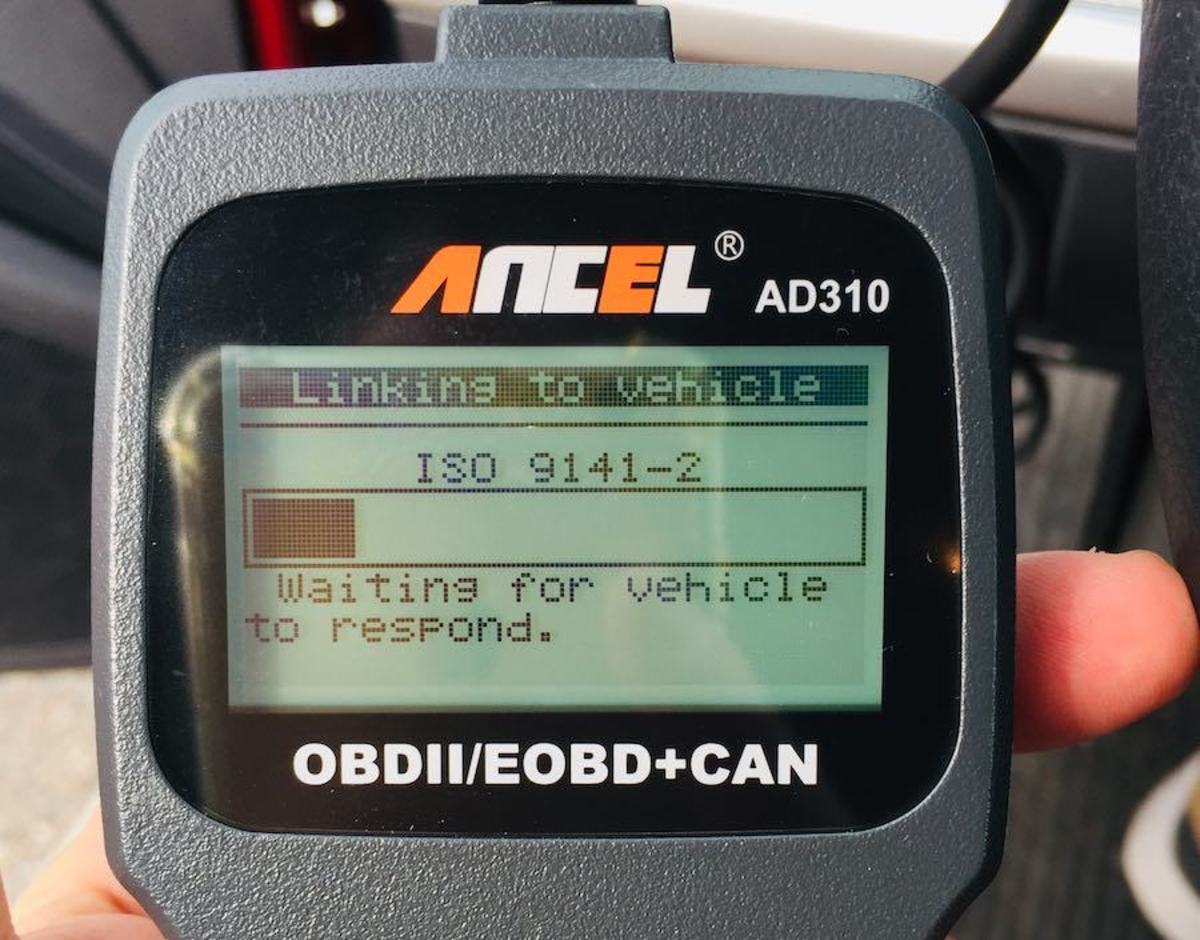
The ANCEL AD310 Scanner has four functions that reveal helpful information about your car's condition, and it clearly prompts you through its use.
I didn't even need to read the user's manual (Although I did anyway).
I'll describe each of these:
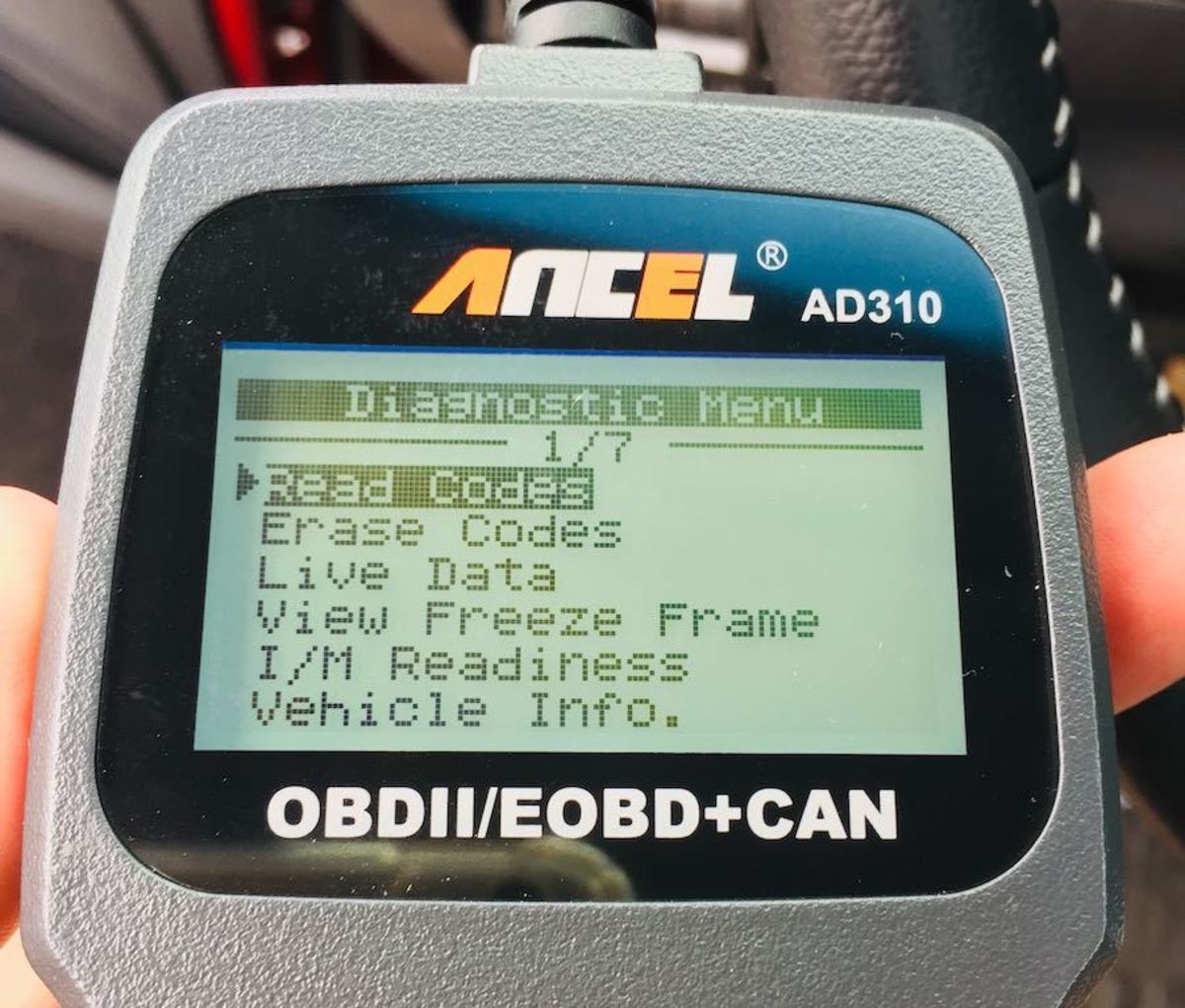
1. Built-in Code Library to Read and Understand Codes
To read the engine's error codes, turn on the ignition without starting the engine.
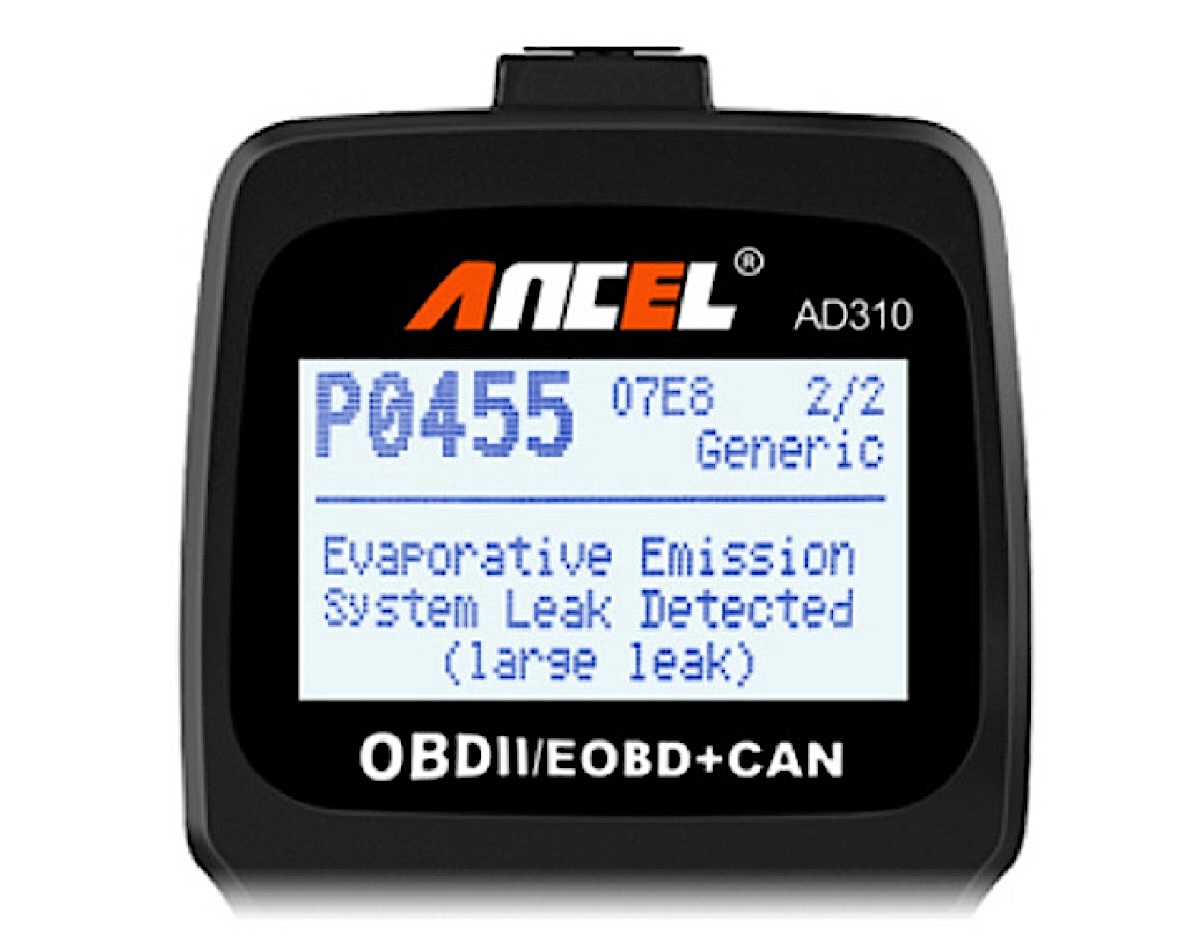
Other scanners only show the code, and you have to look them up online to see what they mean. But the ANCEL AD310 displays the description along with the trouble code, as shown in the image below.
2. Freeze Frame Data Display at Time of Fault
Automobile repair shops have sophisticated scanners that provide freeze-frame data to help diagnose more complex problems by analyzing the data recorded at the time of a fault.
I like the fact that the ANCEL AD310 shows this information. Freeze-frame data is a snapshot of the vehicle's operating conditions when an emission-related fault occurs.
3. Real-Time Live Data Stream
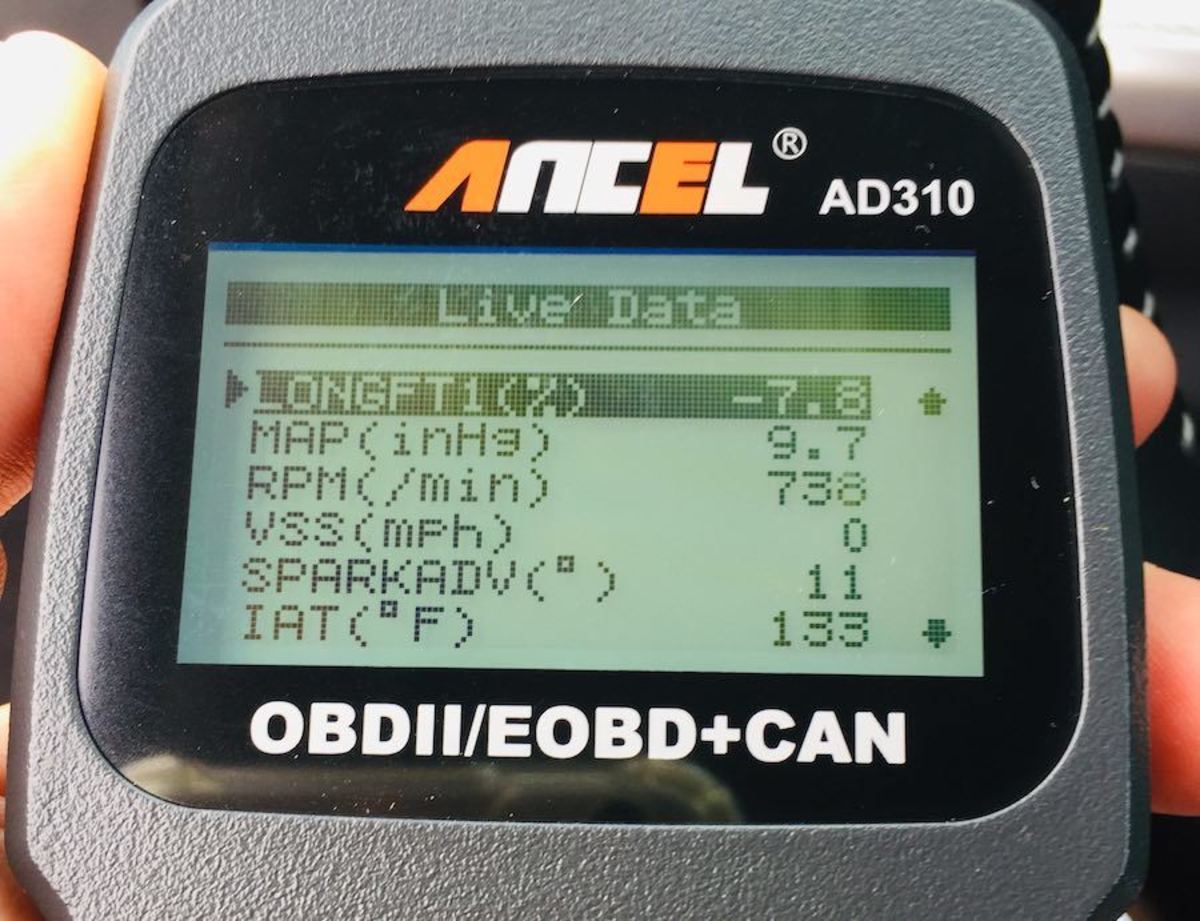
I find it worthwhile to check the real-time data stream, especially with older cars. This data is shown while the engine is running. So, to monitor real-time data, you'll need to start the vehicle.
The example in the image below is only one of several screens of data. You can press the up and down arrows to display other items. The data includes RPM, vehicle speed, voltage, temperature, fuel system status, spark events, and more.
4. Status Readiness Indicator to Pass Inspections
After you have had any repairs done due to a reported OBD code, various parts may not be immediately ready for a state emissions inspection.
Also, if you disconnect the battery for any particular reason, the PCM will lose the data about any existing trouble codes. So your CEL will be off when you reconnect it, but the PCM will have a "not ready" status.
That is also the case if you clear the codes with the scanner. You will not pass your state's emissions inspection until a "ready" status appears for all the related monitors.
The ready status clears after driving up to 100 miles in several sessions, as long as no faults are detected that would place new codes in the PCM.
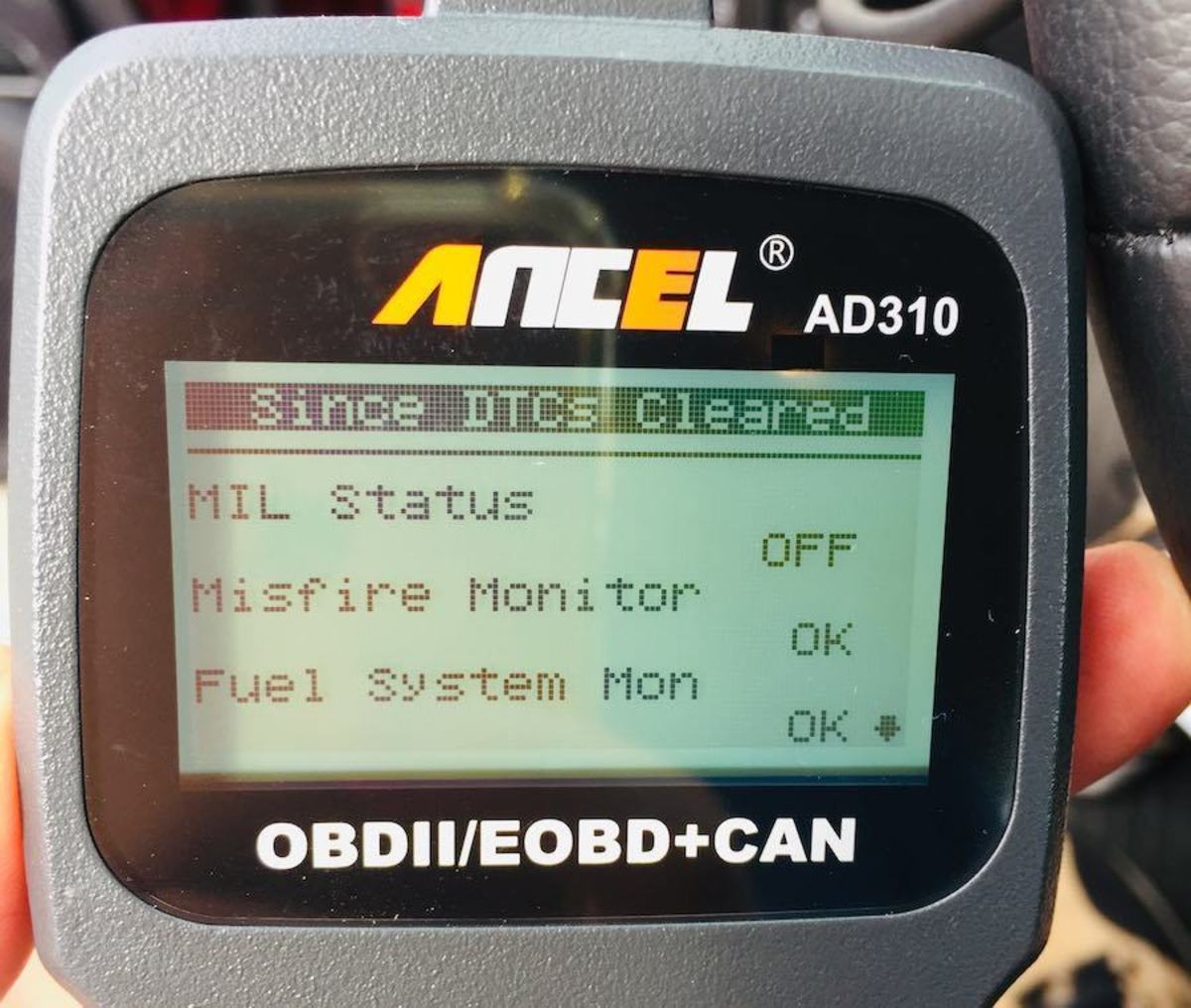
The ANCEL AD310 displays the status of all emissions-critical items necessary to be ready for an emissions test, as shown in the image below. You need to press the down arrow button to scroll through all the items to verify they are ready.
As I mentioned earlier, some error conditions are intermittent and usually due to a malfunctioning sensor. But if the light keeps coming back on after you clear it, you should have a mechanic review the status and determine what further steps are necessary.
Some mechanics will try a more affordable solution first by replacing the sensor. Or they will check the wiring, which could also cause an erroneous error code.
The check engine light should not come back on after a faulty sensor or bad wiring has been replaced—if that's all it was.

In 2008, the National Highway Traffic Safety Administration introduced a new requirement that all new cars and light trucks must have a Tire Pressure Monitoring System (TPMS).
These newer cars and trucks have a TPMS warning light in the dashboard that comes on if the pressure in any of the tires is below 25% of the recommended pressure. A flashing or blinking TPMS light means that one of the TPMS sensors is malfunctioning.
The TPMS codes are not included in the OBD I or II codes and will not be recognized by an OBD scanner. However, if your car has a TPMS system, then it also displays the pressure of each tire on your dashboard.
This scanner displays diagnostics results of Sensor ID, Tire Pressure, Temperature, Battery Condition, and OE part number. Unlike the method of reading the OBD codes, no physical connection is required to read the status of the TPMS. It reads the data via wireless signals.
The TPMS system works by two methods. With a direct valve sensor or indirectly using the ABS/wheel-speed sensors (wheels spin at different speeds based on their inflation).
If your "Tire Pressure Light" is on, check the pressure in each tire. The recommended inflation pressure for most passenger car tires is 32 to 34 PSI when cold. But check your car's owner's manual for its proper pressure.
Drive a while after properly inflating your tires. That will give the system a chance to register that the pressure is okay.
If the TPMS light does not go off after driving for a while with the correct inflation, or if it's flashing, it could mean a fault with the tire pressure sensor or with some other part of the monitoring system.
Some after-market wheels are known to have an issue. The sensor will not fit properly if the valve hole is in the middle of the wheel’s barrel. If you are buying new wheels, check with your dealer to see if they have wheels that are TPMS-compatible.
Question: Does the check engine light eventually turn off without fixing the problem?
Answer: If the problem is not due to an actual component, but rather just a faulty sensor that is intermittent, then you may notice the light goes off after some time. But it may come back on again if the sensor continues to send faulty signals.
It's best to have a mechanic look at it. But tell them that it seems to be a faulty sensor, so they know you already have some knowledge of the situation.
I know two friends who paid dearly for a new expensive part, only to have the light come back on weeks later. The mechanic refused to refund the cost, stating that he had no way of knowing it was only a bad sensor. Don't fall for that.
Question: How many miles need to be driven to reset the check engine light for inspection?
Answer: After you clear the code, drive up to 100 miles to give it a chance to monitor all the sensors and register the results. Sometimes it may be completed in about 50 miles. You'll know when you connect the scanner and check the status. Wait until you see everything is in ready status before going for an inspection.
Question: If you clear check engine codes with a scanner, will it allow you to pass inspection?
Answer: If the problem is a faulty part, the chances are good that the computer will read a new error and register a code again by the time you get into the shop for the inspection. The purpose of this article was not to cheat the system but to avoid costly repairs when only a sensor is at fault.
If it's only an intermittent problem with a sensor, it may take a while for the sensor to get stuck again, and you will pass inspection. Unless the sensor is so bad that it registers a code again before you get your car inspected. In any case, remember to wait until the computer registers "ready," as I mentioned in the last answer.
Question: If I reset my light, will it show up in state inspection?
Answer: As long as you wait for the computer to show a "ready status," then there will be no clue that you had reset the computer. However, if you do indeed have a problem, it will eventually register the code again, and the light will come back on. See my prior answer about how many miles you need to drive before the ready condition is established.
Question: I got a new catalytic converter, but my check engine light is still coming on. Why?
Answer: When the check engine light comes on, and the scanner code shows that the catalytic converter is the cause, it could merely be the sensor that failed.
That's why I recommend using your own scanner to clear the computer and see if the light comes back on. If the sensor is faulty, it may be intermittent.
When a car mechanic reads the code, they'll most likely sell you an expensive catalytic converter when all you needed was a new sensor.
Question: Is it possible that it could be a loose gas cap?
Answer: A loose gas cap causes a fuel vapor leak sensor to register code number P0455, and the check engine light will come on. But this code may be indicating a more serious problem.
You could have damage anywhere in the EVAP system, which captures and returns the fuel vapor.
By all means, make sure your gas cap is tight. And if its seal looks damaged, get a new gas cap. But if the light continues coming on and your scanner shows P0455, get it checked out.
Question: What happens if you clear the codes by disconnecting the car's battery?
Answer: That's the same as clearing the codes with the diagnostic scanner. The "Ready status" needs to be reestablished before your vehicle will pass the emissions test. The "ready status" will register automatically after you drive up to 100 miles.
However, the OBD error code will reappear, and the check engine light will come back on if the original error is detected again.
Question: I'm getting code P0340, which indicates a sensor malfunction for the camshaft position. I changed the crankshaft position sensor, but that didn’t help. What else should I do?
Answer: Besides the Camshaft Position Sensor, the P0340 code could also indicate problems with the wiring between the sensor and PCM. Or even a bad PCM.
The sensor reads the data of the camshaft gears, so the P0340 code could also mean a timing problem. Therefore, you should check the timing belt. It can be worn or loose.
Question: I seem to have problems with my transmission, and I have an OBD code P0700. However, after getting the code, the check engine light went off. What should I do?
Answer: Code P0700 means "Transmission Control System Malfunction." That could be caused by various problems with your transmission or something related to it. For example, if you have difficulty shifting gears or your engine tends to stall, it can be due to this issue.
Since the light went out, it could be a minor issue. But you need to have a mechanic check it to be sure.
Find a reputable transmission specialist by asking friends for references. The problem is that a dishonest mechanic might insist you need a new transmission when you have code P0700, but you may not necessarily need to replace it.
This is because this code only indicates a fault in the transmission. A good mechanic will get a reading from the transmission module to determine the exact problem.
Question: I have error code P0171, and my car is running rough and wasting gas. What's causing this?
Answer: If your car is running rough with this code, it could mean there is too much gasoline in the air-fuel ratio. The PCM detects that the system is running too lean (Too much air or too little fuel. The result could be an engine running rough.
You might also notice poor gas mileage. The PCM will try to adjust for that, but it would be helpful to have a mechanic diagnose the cause of the problem.
Question: My check engine light is on with OBD code P0136 and P0137. What does this mean?
Answer: P0136 and P0137 refer to the downstream oxygen sensor (O2 for bank 1, Sensor 2). There are two O2 sensors, one before and one after each catalytic converter. They measure the amount of oxygen present in your exhaust to determine if the catalytic converter is functioning properly.
Since you have both these codes, your bank 1, sensor 2 is not showing a voltage above 0.21 volts, indicating that there is excessive oxygen in the exhaust. In other words, the exhaust is too lean.
Your mechanic should test the voltage and ground on the sensor to determine the problem.
Question: What do the OBD codes P0300 and P0339 mean?
Answer: The P0300 OBD code indicates "Random Misfire Detected." That means not all the cylinders are firing correctly.
The P0339 OBD code indicates "Crankshaft Position Sensor B Circuit Intermittent." It means the powertrain control module (PCM) is detecting an erratic voltage from sensor B, which is the secondary crankshaft position (CKP) sensor.
In both cases, it's best to have your mechanic check your vehicle to determine if repairs are required.
Question: The code "P0011" has appeared after having driven over 45,000 miles. What does that mean?
Answer: That code refers to the Camshaft Position. The VVT (variable valve timing) or VCT (variable camshaft timing) components give the error and need to be checked by a mechanic.
Remember that you can always check your emission system’s status yourself.
The ability to read the OBD diagnostic codes and monitor your car's performance helps you be better informed about its operating condition before bringing it in for repair.
There is no need to pay a mechanic for a diagnostic reading. Never get suckered into a repair job you may not need.
Was this article helpful?