
Last updated April 2026 — edited for clarity.
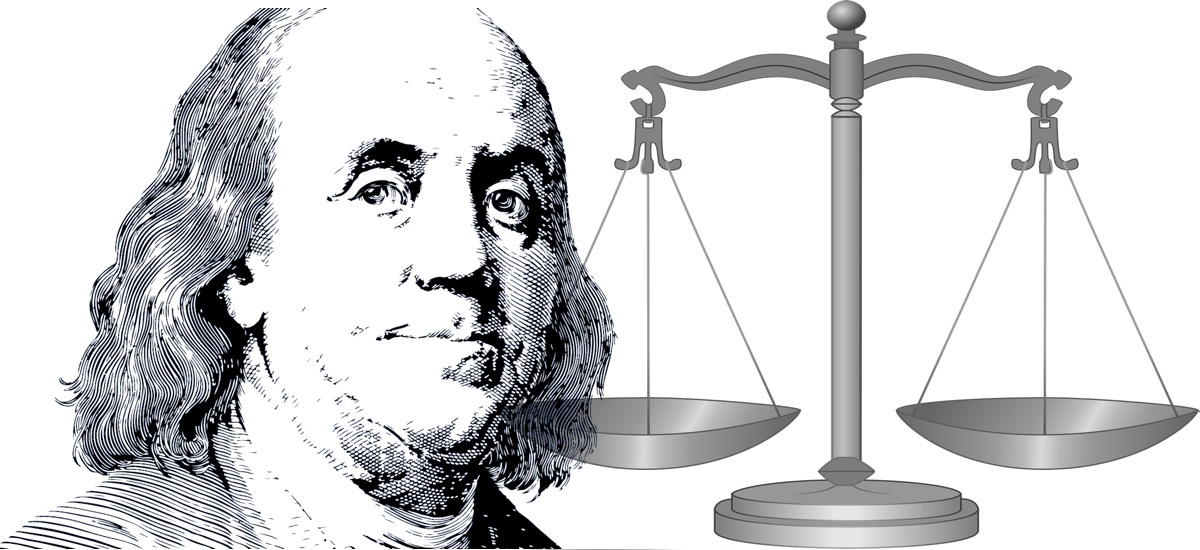
Ben Franklin listed the pros and cons to understand all available options when he faced conflicts in making decisions. In this article, I explain this process.
We all need to make decisions in life. Some may be of little consequence, such as deciding what color shirt to wear to a friend's party. However, other decisions can sometimes be stressful.
For example, how did you handle it when you needed to choose a career, buy your last car, or decide what town to move to when relocating? You might even have been overwhelmed with selecting where to take the wife and kids on vacation.
All the pros and cons we need to consider when making difficult decisions are not all in our minds at once. So, we have confusion and uncertainty when both sides of an issue are not clear. Therefore, it’s difficult to reason with our emotions and determine which choice to make.
We will likely choose the wrong option when we only consider one side of the matter. So for that reason, it’s crucial to simultaneously visualize all options, both pro and con, in an organized fashion.
Every choice we made in the past has brought us to the exact place where we are now—physically, mentally, emotionally, and spiritually. If we have too many options to choose from, we need a logical method of analyzing and organizing them to help make plans.
I learned a solution from reading Ben Franklin's personal letters  published by Leonard W. Labaree (editor) in 1956. 1
He found a way to help make difficult decisions by creating a weighted list of pros and cons. That can be thought of as a balance sheet because he would apply a weight to each item for consideration.
Franklin's method of using a weighted list is a uniquely detailed technique to help make difficult decisions with the conflicts he had in his life. I'll explain how that works, but I'll first show you a simple method most people use.

Make a list in two columns. One column contains all the pros, and the other contains all the cons. This strategy has two advantages:
Clarity is essential in deciding how you want to handle things or which path in life you wish to follow. That helps avoid procrastination, usually due to a failure to understand the outcome of various options. When one does not know what to expect, they tend to do nothing.
Making lists provides a great benefit. It helps make informed decisions, and the visual clarity achieved from the lists puts things into focus.
When you make an effort to write down all the pros and cons, you are actually forcing your brain to realize all the positive and negative aspects of the decision you have difficulty making. That gives you the power to take action in the right direction!
Analyzing the pros and cons may also help with commitment issues. Committing to something or someone is easier when you have a good understanding of the positive and negative points. Making a list such as this brings it visually into focus.
Franklin clearly explained the problem we all have with decision-making. I have my own way of explaining it based on what I learned from studying his methods.
Franklin’s technique was to make two lists, side by side, in two columns on a sheet of paper. He would list the pros in one column and the cons in the other column.
For many of us, that list may be sufficient to help visualize both sides of a decision. However, an extensive list might be too overwhelming to consider, and it may leave one with more confusion.
Ben solved that problem and made his list much more instructive by applying an algorithmic technique. This process reduces the list to a manageable size and only leaves the most important items to consider for making the ultimate decision.
Franklin didn’t have a comfortable life. It was full of conflicts, as was evident with his chasing after other women.
He dated Deborah Read while she was married to another man. Later, when her husband passed away, Ben settled down into a common-law marriage with her. She had a child from her marriage, and she and Ben had two children of their own. However, they never married.
The way Ben treated Deborah was sad. He stayed away for years at a time, living with other women. He was not committed to a life with Deborah but had children with her. 2
The first of their two children, Francis Folger Franklin, died of smallpox. The second child, Sarah Franklin, cared for her father in his old age. It was good that he had her there to help. She was a dedicated daughter.
Ben might have used his decision-making method of listing pros and cons to help with his commitment issues with getting married. And based on the results of the weighted-list technique, he would have decided to keep it a common-law marriage.
To him, it made no difference. He had a close family and was a decent man with the way he handled all the trials and tribulations of his life, such as the loss of his first child. His only malice was how he treated Deborah.
Ben Franklin had a fascinating life, although a difficult one. So I can see how he came up with the idea of applying the pros and cons to his thought process to make decisions.
I'm sure he found it an easy way to analyze the options available in his complicated life.
Was this article helpful?