

Communication via letters, text, or email is not as effective as face-to-face communication because the sentiment and emotion are not noticed. When people speak in person rather than over the phone or email, their body language helps them understand subtle meanings.1
People need to see each other’s reactions. Words can be misconstrued through text because it leaves out visual means of communication, such as body language, that are important for understanding.
When in person, one can notice nonverbal cues, such as facial expressions, body posture, and gestures. That conveys information that cannot be detected from words alone.
Sometimes, one can even tell if the other person is not truthful by how they handle eye contact. If one avoids eye contact, it may indicate that they are hiding something or are not honest.
However, cultural differences need to be taken into consideration. In some cultures, it is considered a sign of disrespect for a young person to make eye contact with an elder.
Interestingly, when people speak with one another, one person will respond within a fraction of a second after the other finishes speaking.
That means the other person is not responding to the conceptual meaning of the sentence but rather to body language to determine when they can reply.2
Nevertheless, that interaction is necessary for exchanging thoughts. Body language is a crucial part of communication. The slightest changes in body position can cause one to respond if they want to add to the conversation.
Nonverbal cues can add meaningful exchanges of thoughts. Especially when noticing a sense of approval with a facial expression.

Nonverbal communication is only possible in face-to-face conversations because of the advantage of seeing one’s body language and having eye contact.
Hand gestures are a common aspect of verbal communication. However, this could be detrimental to a discussion in cases when having a conversation with someone of a different culture.
For example, pointing at something with one finger is considered rude among Asians. It is similar to our middle finger salute. Asians usually point using their entire hand.
Before computers were used for communication, people used to meet at community gatherings to discuss public affairs and plan social activities.
With email, instant messaging, texting, and other methods of group communication provided by computer technology, people don’t need to leave the house or office for community or company meetings anymore.
The technology makes it so easy to communicate that people use it to share messages on social media sites and send info via global mailing lists instead of getting together in real life.
This is our modern-day society. It causes people to lose the ability to function in face-to-face situations.
Today, people are losing their social skills because quick correspondence by telephone, smartphone, email, instant messaging, and texting is easy.
Face-to-face conversations have become less frequent. People call one another when they need a quick answer to a question or to schedule or confirm an appointment. They rarely call one another to have a meaningful conversation. They call to chat, but nothing serious.
I learned a crucial lesson after making a particular mistake several times. I’d send text messages or emails that had been mistaken as hostile when, in fact, I was making a joke about one thing or another.
When I talked with a psychologist about a friend who mistook my meaning in such an email, he asked me if I included LOL in it. I did not.
I thought my humor was apparent. However, without face-to-face contact, that part of the communication was not realized as expected.
When people don’t have visual or auditory feedback that displays the speaker’s emotions, they have to interpret that from the text.
They can easily get that wrong based on their feelings at the moment. Now I try to limit humor to live conversations.
When we write to a friend to discuss an important issue or ask for something from a business correspondent, we never know how the message will be received.
A friend once gave me an excellent example. When she had problems at work, she wrote a letter to her boss. She thought it was more professional than requesting her boss’s time for a meeting, and her boss could read it when she had time to absorb the contents.
She thought her letter would be read and understood as she meant. Unfortunately, her boss only read part of it and completely misunderstood the seriousness of the matter.
Face-to-face is an effective two-way process. You know your message has been received, and you can tell if it was understood. You could see the response, facial expression, and body language signals. That feedback is priceless.
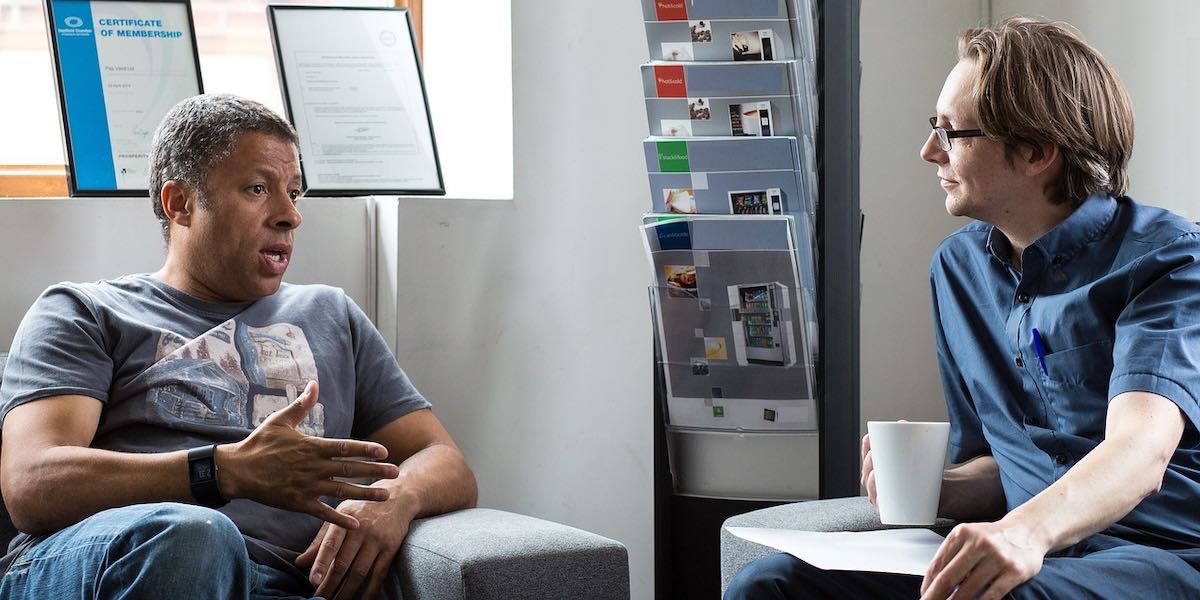
Visual feedback is valuable. It’s useless to keep talking if you observe that the listener is not interested. They may be fidgeting or looking away. Respond to that appropriately by changing the topic or giving the listener time to speak. This interaction makes the conversation much more meaningful.
As a listener, show you’re interested and want to understand when you missed the point. If the speaker didn’t make something clear, bring it up before it gets lost in further discussion. Ask questions and interject, but let the speaker complete their thought.
Here are proper techniques:
A face-to-face conversation is helpful for collaborating on a business venture or asking a boss for a raise. You wouldn’t even consider asking for a job promotion without doing it in person, would you?
That is especially helpful in a sales interaction, for example, where visual feedback of body language is so valuable. A top-notch salesperson uses body language to know how to proceed with a sales pitch.
Customer service is also best face-to-face since all visual cues can be picked up and responded to appropriately. A customer may be frustrated about a product or may have a question. Visual feedback shows quickly if they understand the help one is providing.
Using the techniques I’ve described enhances personal conversations among friends, and they will want to get together more often for an enjoyable chat.
A face-to-face conversation is also helpful in having insightful discussions of mutual interest. Before Alexander Graham Bell invented the telephone in 1876, people had no choice but to get together when they wanted to have a conversation. Social skills were enhanced since people were accustomed to the art of conversation.
With the Internet and texting on smartphones, many people lose a vital part of human communication.
The two-way process is achieved when face-to-face brings an additional dimension to the interaction.
How else can we enjoy the beauty of a smile or detect the sense of approval with the wink of an eye?
Was this meaningful to you? Tap