I grew up with a "broken" family tree. While others had connections with their grandfathers and grandmothers, I lived with an ancestral loss as a third-generation descendant of Holocaust survivors.
My father's parents were killed in the Holocaust. The emotional impact of this "legacy of silence" had a psychological impact growing up without the grandparents I never knew.
As my sister and I tried to understand our broken family lineage left by the Holocaust, we realized the gap in our collective memories. The loss of our grandparents left a void in our lives. But worse, my father lived with the memory of losing his parents.
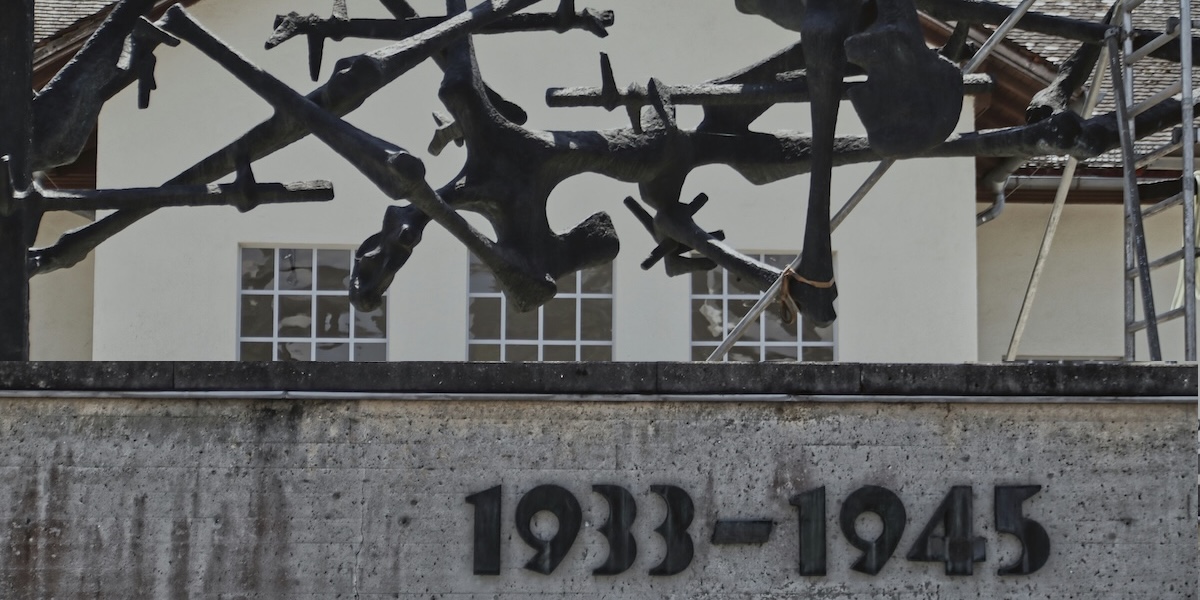
The Holocaust was a drastic historical event that led to the mass murder of over six million Jews by Nazi Germany under Adolf Hitler's rule between 1933 and 1945.1
My parents left Vienna for America when the Nazis burned my father's office in November 1938 as part of their "Kristallnacht" terror campaign against Jews in Germany and Austria.2
The next step for my father was to get his parents out of harm's way.
Growing up as a child of Holocaust survivors, I knew something was missing in our family tree. But I didn't understand it when I was a child. My parents never discussed it, so I never learned anything about my grandparents.
My friends all talked about their grandmothers and grandfathers. They learned about life from them and could share their feelings, which helped during their developmental years.
It's common for children to feel more comfortable talking about life issues with their grandparents rather than their parents.
I didn't have that; I had no grandparents to talk with. I lived with a profound ancestral loss. This legacy of silence is a common thread for many in the third generation.
The day was July 15, 1942. My grandparents were ready to leave on the ship to escape Austria to America the following morning. They had packed what they needed and the few things they wanted to take with them as a memory of the life they were leaving behind.
Suddenly, there was pounding on the door, not a usual knock-knock-knock, but a rough pounding that could have given one a heart attack.
They were afraid to open the door, fearing who it was. That didn't help. Everything changed in seconds.
The Nazis smashed the door open and violently took the elderly, screaming couple out of their home. Someone must have tipped them off, storming the apartment just the day before they were about to leave. One will never know. The Nazis always watched and waited for reasons to do away with the Jews.
They were dragged to a patrol wagon and brought to a holding center, where they were detained overnight.
The next day, they were carted off to a Russian concentration camp on the outskirts of Minsk, Belarus, with several other Jews who were also apprehended just before they were about to escape to a better world.
The camp was initially for holding Soviet prisoners of war since June 22, 1941, an activity known as Operation Barbarossa. However, on May 10, 1942, it became an extermination camp known as Vernichtungslager.
Jews were brought there from Germany, Poland, the Netherlands, Austria, and the present-day Czech Republic (known as the Protectorate of Bohemia and Moravia at that time).3
Many were shot in the forest before even reaching the camp. Shot in the back of the neck. The ones who made it to the camp weren't any safer. The sick and elderly were not cared for, and the young and healthy were forced into labor.
The Nazis had no compassion for them and found it much easier to eliminate the weak ones. Most of them were lined up in front of large pits where they were shot, and then tractors came and flattened out the land.3
Many others were brought into mobile gas chambers that were thought to be community showers. Once inside, the gas was released, and they never came out alive.
The eradication of the Jewish population was in full swing, and without any hesitation, possibly because they were elderly, my grandparents were shot three days after arrival.
My parents were lucky to have left Austria in time. My father hoped to reunite with his parents soon after, but his expectations were shattered when they were murdered. My father never talked about it. Neither of my parents could speak about the past. They needed to avoid the horrific memories.
My father had a stoic personality due to the psychological impact of the Holocaust. He was incapable of sharing personal feelings because he became emotionally numb due to losing his parents in such a tragic way.
As a child, I never understood why my father was so emotionally hindered. As an adult, I can understand how losing one's parents in such a tragic manner can destroy one's spirit. Unfortunately, I never could talk with my father about it. The subject was taboo.
My father made every effort to continue his life. He never lost his respect for community and family values, although he had made a conscious effort to overpower his sorrow.
He went on to build a practice as a medical doctor in America and made a safe and pleasant home for his wife and kids (my sister and me). Nevertheless, I knew something was missing. My father worked unselfishly around the clock, thinking only of his patients.
I later understood that this was his way of avoiding thinking about the past and evoking the true nature of the deep gloom that remained with him.
My parents were willing to become part of their new life and quickly assimilated into American society. They both filed for citizenship, studied American history, and learned English.
My dad focused on being the best he could be to contribute to society. Although he was a medical doctor in Austria, he had to apply for a license to practice Medicine in America.
My mom was a housewife, the social custom in those days. That was a job in itself; raising kids, tending to the home, and even teaching. I have to say, she did well. Despite English being her second language, I still remember her helping me with my spelling homework. She did okay.
Most people did't know the hard work immigrants went through to blend into society, especially in those days. It was different then. No one took anything for granted. They studied hard and worked hard.
My parents first settled in a small town in northern New York State—a mining town known as Port Henry.
Many of the miners were sick with lung diseases from their mining careers. My father, being a doctor, told them the truth about why they were ill.
Unfortunately, the other doctors at that time agreed with the mining company to keep this a secret. They made life very difficult for my father, so he eventually left town and headed for the New York City suburbs with my mother and sister.
Once again, he had to leave a life he was trying to build to seek another life elsewhere. I can imagine how unsettling that must be for someone.
I wasn't born yet, so I never knew what he and my mother went through. All that urgency to get away from a troubling situation, only to have that repeated once again in America.
My parents' ability to start a family was delayed because of the Holocaust. My mother was already 43 when I was born, although she was younger when she had my sister, who is seven years older than I am.
I developed a philosophy on life that stemmed from lessons learned observing my father's way of handling things.
My father strongly desired to support his family and worked very hard to do so. However, he had little desire to think of the future. His experience with losing his parents in the Holocaust caused him to become emotionally restrained.
He was always living in the present, focusing only on daily events. Observing his behavior shaped my personality, and I became someone who lives for the moment:
I just went through the motions of handling things on a daily basis. I wonder if this attitude came from my father's stoic philosophy.
I got a good education with a Master's Degree. I worked for a couple of large corporations before starting my own company. I worked hard, as my father did. I focused on my business rather than what I wanted for the future.
All that attitude is a result of observation, learning to live day-to-day by noticing how my parents handled life.
I understand that this is how my dad was able to carry on with his life: marrying a good woman, establishing a career, building a new life, creating a family, and doing the best for his kids.
The Nazis kept records of all their murders, preserving family history. Those murder records were not accessible until recently, when they were transcribed and made available online. That's how I was finally able to track down the demise of my grandparents.
It took a lot of research, but I learned that starting with a Google search of names, dates, and locations is the way to begin the search.
If you are comfortable chatting with AI, you can do real-time research with ChatGPT, Grok, or Google's Gemini to help you trace the Holocaust archives.
I never talked with my father about his life before my birth. I was too young to consider the importance of generational communication. And for that matter, whenever I did try, he couldn't talk about it. It was too painful for him to recall the memories.
My mother also didn't want to share stories. She was too afraid of repercussions. In those days, they still feared that the Nazis might come to America and take Jews away.
If my dad were alive today and with the wisdom I now have, I would have an adult conversation to learn about my Holocaust survivor parents. I wish I had asked the following 20 questions. My sister said she was missing the same information. I learned the answers to the first two questions with an Internet search. Not knowing the other answers will forever be a void in my life.
My father was always depressed, emotionally. I realize he never forgave himself for not having done better at getting his parents out along with him.
I could tell that he was hurting. He could never, ever, let go of that hurt. And he could never talk about it. I can only imagine the pain of having one's parents murdered. He carried that with him till the day he died.
I realized I have a lack of knowledge about my family history. There is no way to get the answers now. It's all in the past, and anyone who might have the answers is already dead. It's too late.
I'm sure whatever the answers were, it must have affected me in some way, with my upbringing, my parents' attitude with constant fear, and my subconscious response to their worries.
I will forever have a massive void without knowing my ancestors' history and what contributed to my existence. That could be the result for many children of Holocaust survivors.
Was this meaningful to you? Tap