
Published March 18, 2026
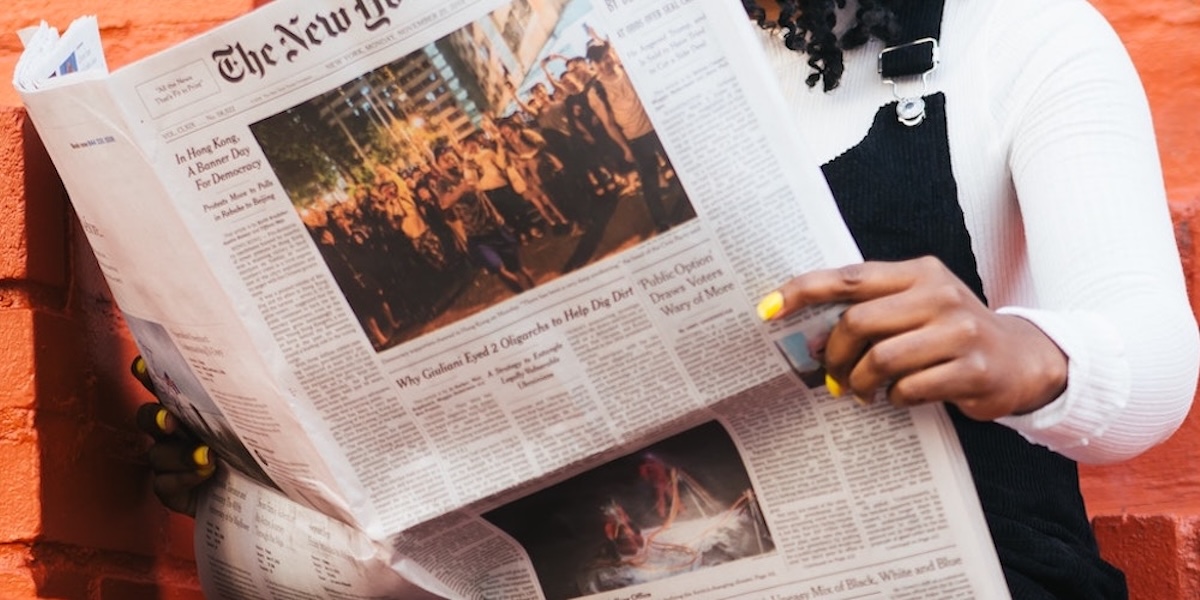
Opinionated news can manipulate beliefs and influence political and economic thinking. Discover the deception in journalism and learn how to distinguish truth from misinformation.
Professional journalists cite credible sources when necessary to clarify whether it’s merely their opinion or is indeed factual. It would not be professional if they leave out crucial details, which they would do if they intend to report solely based on their agenda.
Therefore, journalists should confirm the credibility of their stories. Unfortunately, many news reporters who claim to be journalists only offer their opinions on the topics they report.
For that reason, people need to pay more attention to a news reporter’s intention so they can diligently assess the validity and value of the report.
To that point, it’s important to understand how social media often censors credible information when it doesn’t meet with their agenda.
Fake news is presented similarly to how cyber hackers create phishing scams. They write in such a way as to seem realistic. I mention this to present an analogy of how people can get fooled.
Sometimes it’s difficult to determine if you are being scammed. Here is an example with scams in emails:
You receive a warning that your bank account has been overdrawn. The email asks you to log in to check your account. They make it easy by including a link to log on.
Unfortunately, many people don’t understand how Internet addresses (URLs) in links are structured. It appears legitimate, so you click the link to log in.
Of course, it fails because it’s not the actual site, but the damage is done. You just gave away your login information to the hacker.
What does that have to do with fake news?
It’s the same thing. It seems legitimate. Unfortunately, people often don’t know where the information came from or how it differs from the truth.
Without knowing how to determine its accuracy, they trust the media and consider the information dependable.
Fake news spreads like wildfire from one friend to another. And it’s made easier with social media.
A survey conducted by the Pew Research Center found that half of U.S. adults get their news on social media.1
One needs to ask, who is really benefiting — the viewer or the media?
My “cyber hacker analogy” is an excellent example. A hacker who sends scam emails will benefit when victims follow through with the instructions provided.
In addition, proficient hackers write code that propagates their emails from one computer to another. That makes their phishing emails seem to have come from trusted friends, and one is more likely to fall for the scam.
The same is true of fake news. It spreads like wildfire from one friend to another. The news media will benefit from this by attracting more viewers.
When people continue to hear the same fake news from numerous sources in their lives, and when trusted friends repeat it, the news becomes falsely genuine in their minds.
The appearance of information coming from supposedly trusted sources is overwhelmingly believable.

Many media spokespersons express opinions influenced by their biases. Trust in journalism diminishes when reporters present a narrow and limited perspective to avoid facts that contradict their preferred narrative.
To achieve that, they offer little detail to support their personal views. They leave out anything factual that interferes with their agenda.
Fake news has already destroyed trust in journalism. Moreover, fake editorials presented as actual news can harm political views in our society.2
People who have the resourcefulness to research the data for accuracy can see through the personal views of so-called journalists. However, some people tend to accept everything they hear as truthful.
Through my research, I came upon the term “citizen journalist.” They are people just like you and me who might happen to be in a location where a newsworthy story is taking place. And since most of us have smartphones with cameras, we begin filming a video.
A citizen journalist will take it to the next level and post that video on social media with their own twist on the event. They do that to spread their personal beliefs.
Unfortunately, when they only show selective parts of the whole story, these media posts spread misinformation.3
Using my analogy once again with cyber-phishing attempts: A phishing email can include telltale signs such as misspelled company names or a lack of details.
The accuracy of the data is the most important thing to investigate, such as knowing where the URL would link to if you were to click on it. Hovering over a link before clicking it will display the link’s destination with most browsers.
Similarly, in the case of newscasts, careful examination of the details is crucial. If a viewer is vigilant, they can apply the same evaluation method to determine whether news reports are fake or factual.
The credibility of news information can be difficult to determine, especially when it is well-constructed and appears to serve the viewer’s interest.
Stanford University conducted a study in 2020 that showed many college students had struggled to identify misinformation in news reports.4
There is a difference between writing about facts and expressing opinions. The best controversial articles clearly present factual information while also including a personal perspective.
Honest journalists will emphasize this difference so readers can form their own judgments instead of being swayed by misinformation.
A journalist’s job is to present the facts, and when they offer an interpretation, it must be done as objectively as possible.5
Journalists need to avoid prejudiced writing, which can be challenging when they favor specific political parties and leaders. But that’s why they need to be objective and cover stories honestly and openly with credibility and expertise.6
An article’s value will be recognized when it’s written from the heart and is accurate with facts.
Introducing a personal viewpoint on debatable issues and sharing personal thoughts or feelings can sometimes ignite an emotional spark that encourages engagement.
But if the agenda is to force unrealistic views on the listener, it’s not valuable information.
Many people believe fake news without taking the crucial step of analyzing the factual nature of the information. However, those who are vigilant tend to lose trust in journalism.
Unfortunately, in our society, people gravitate toward intense news reports that may not be accurate or even true. Therefore, news reporters find it gratifying to provide the information they believe people want to see and hear, be it true or not.7
Was this article helpful?

